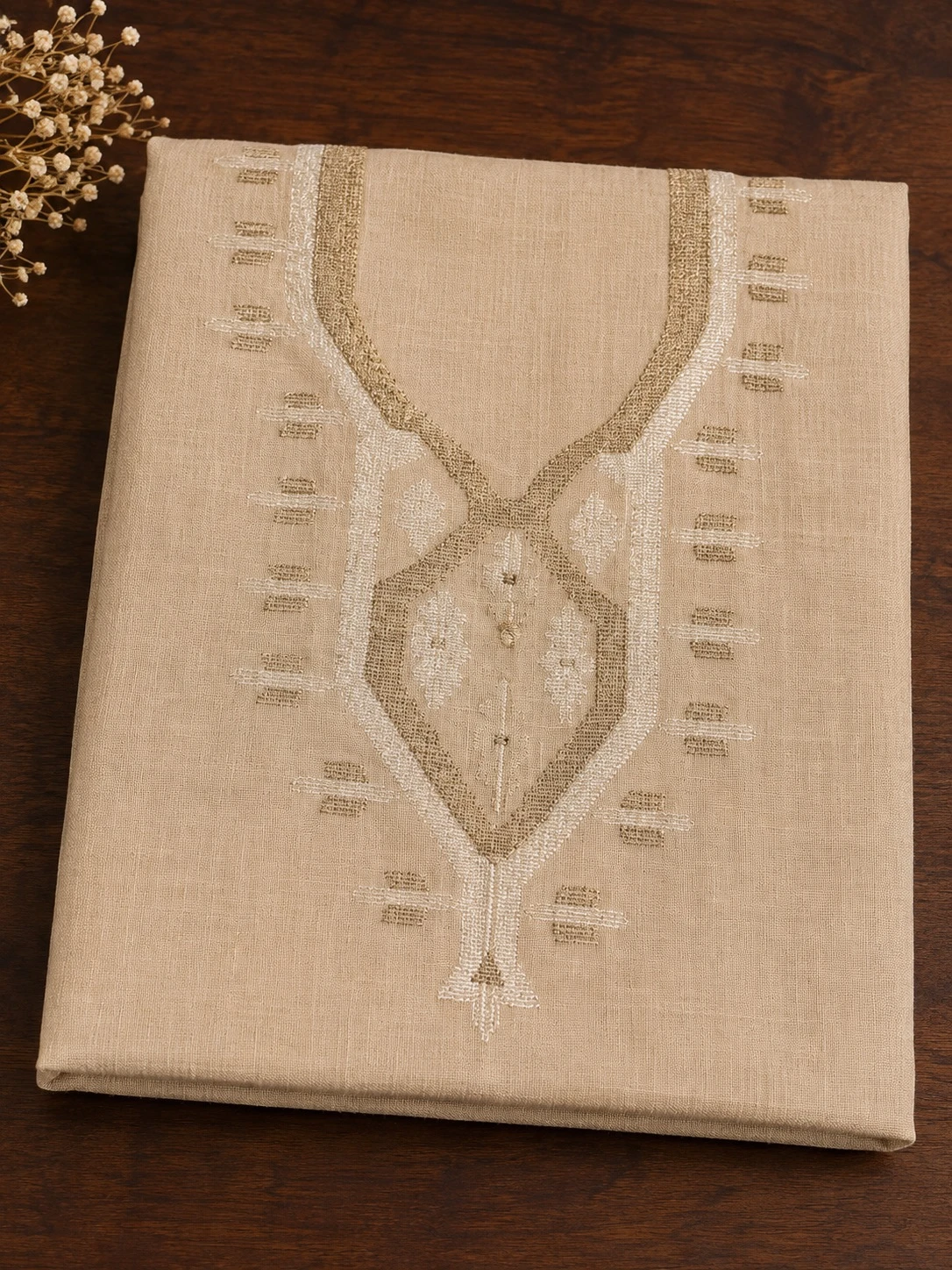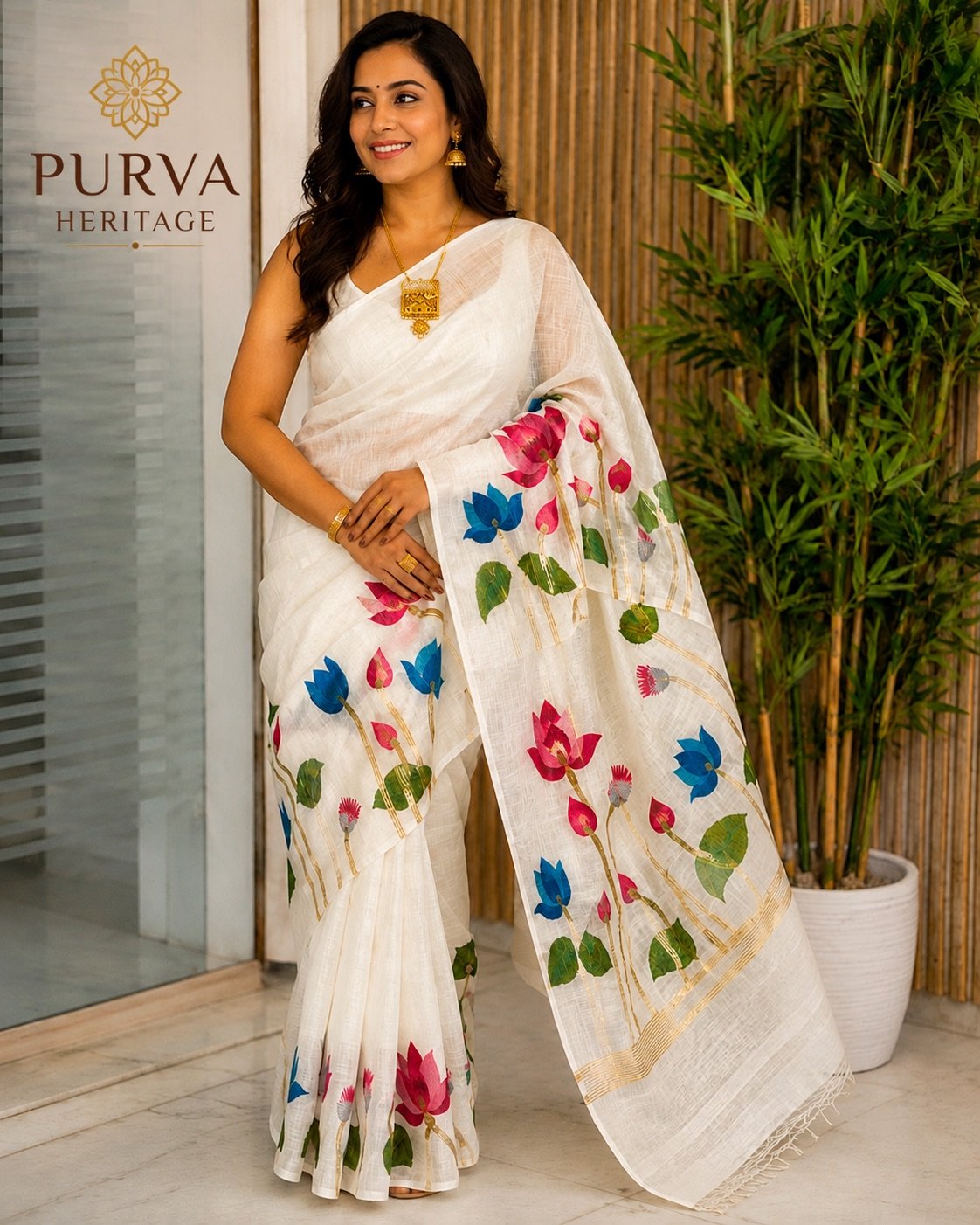
Mutka Muslin Jamdani Kolkata
Bengal’s handlooms have clothed the region for centuries. In Fulia and Shantipur, on the Hooghly, weavers still work pit looms by hand and foot, throwing fine cotton tant and figuring jamdani motifs into the cloth thread by thread. In Bolpur, women stitch Kantha. Each saree passes through many hands — dyeing, warping, weaving, stitching — before it is folded and sent on.
Mutka Muslin Jamdani Kolkata
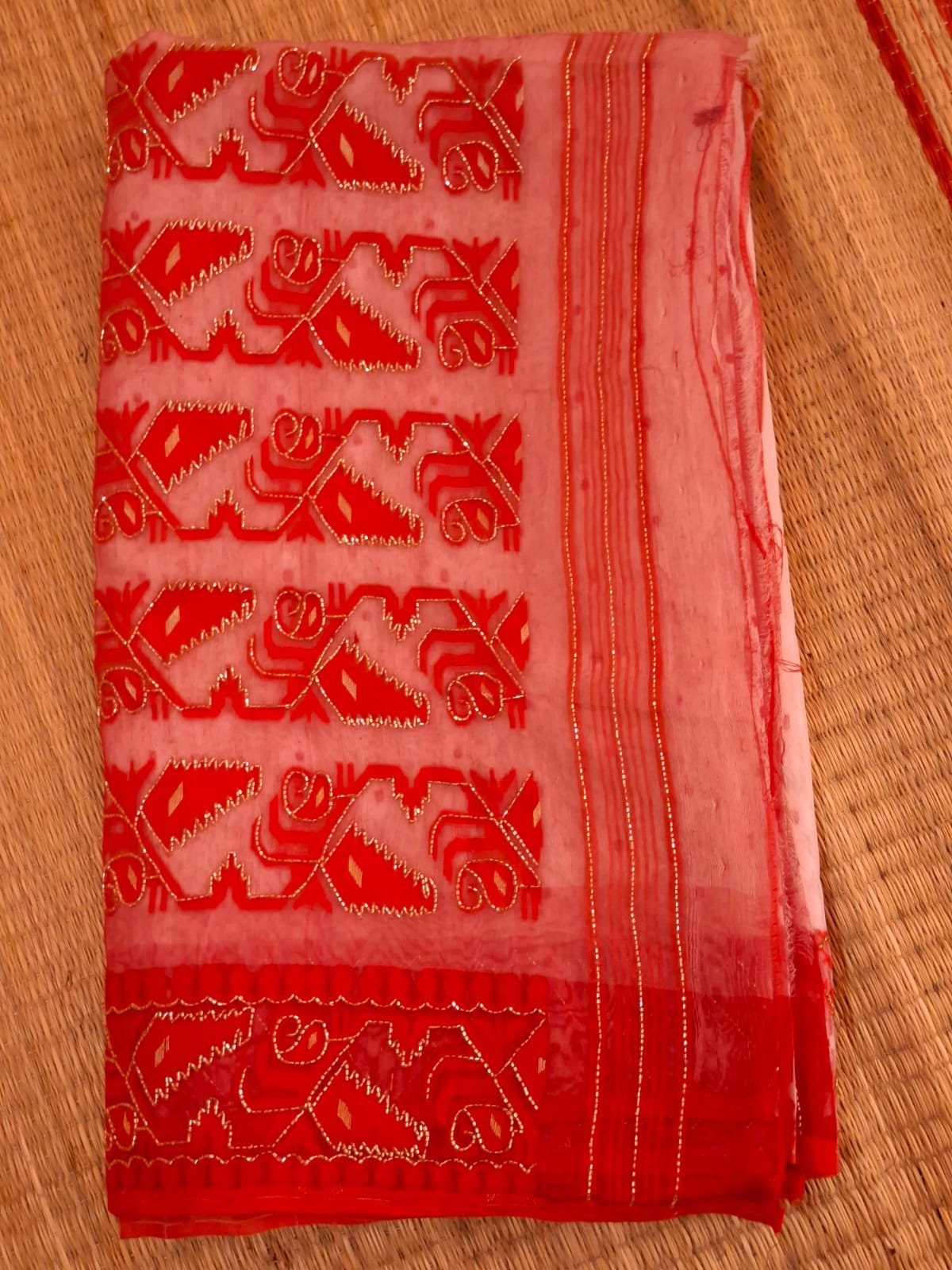
Jamdani · Fulia
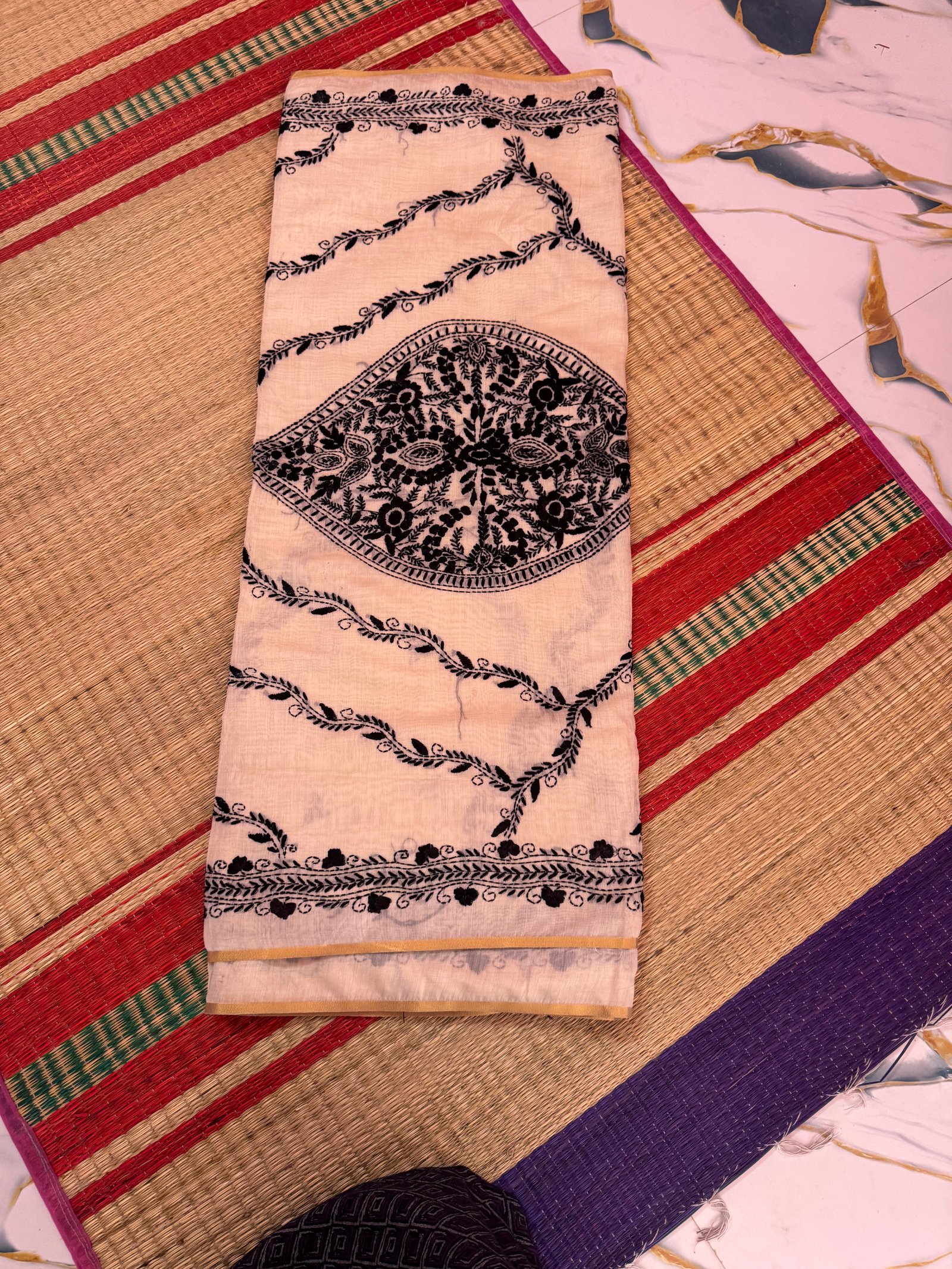
Kantha · Bolpur
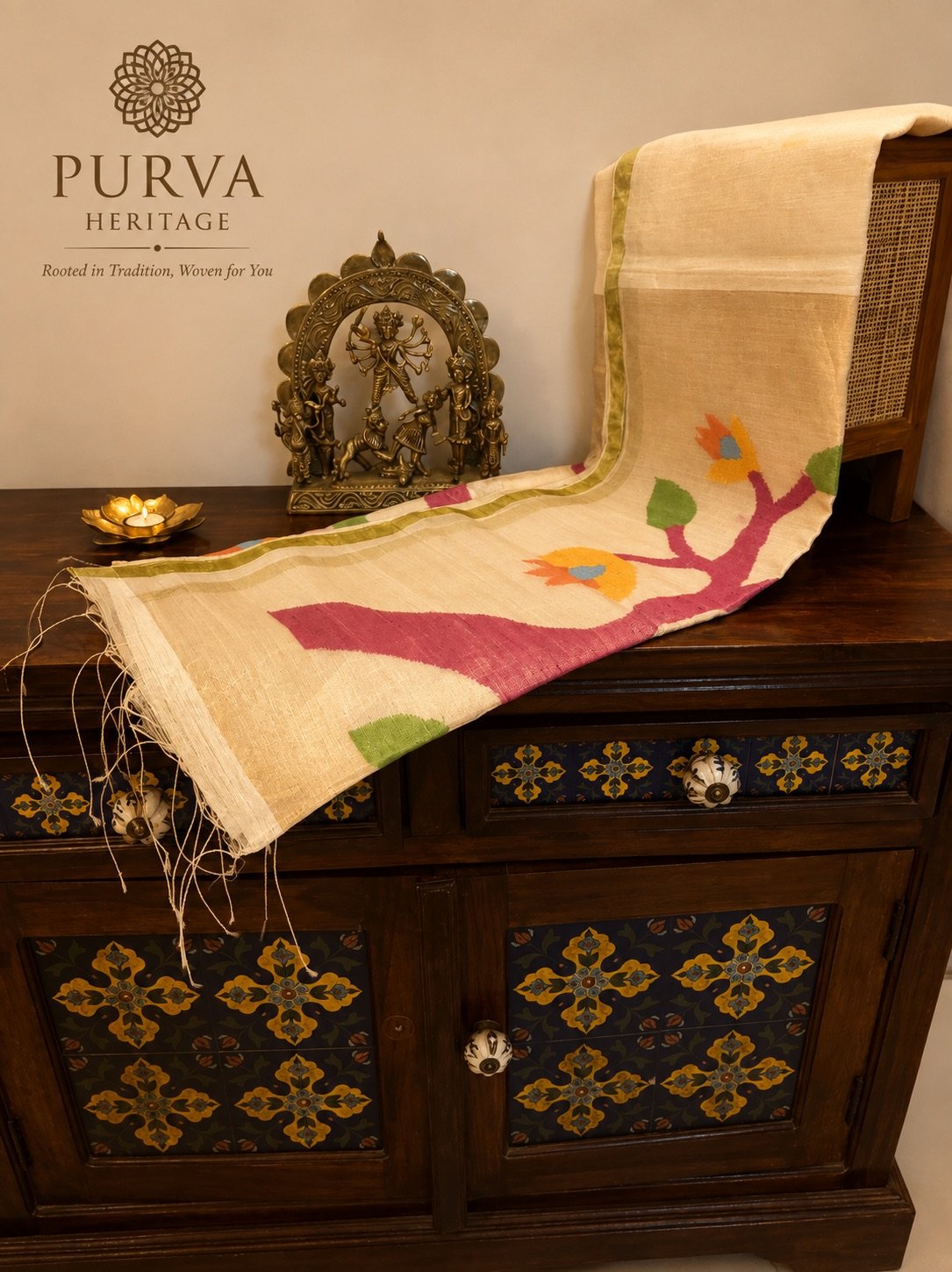
Mukta Muslin Jamdani · Fulia

Kantha · Bolpur
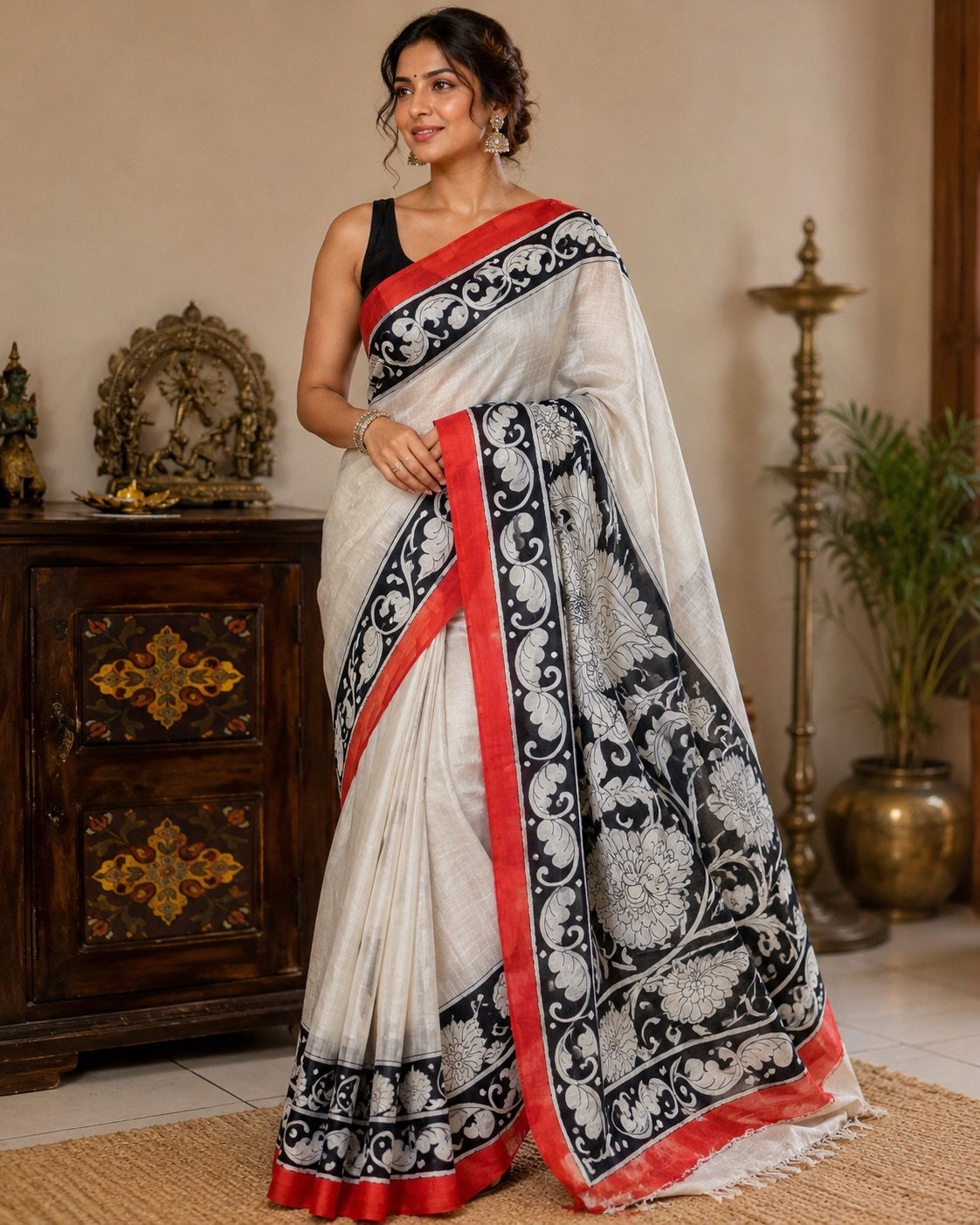
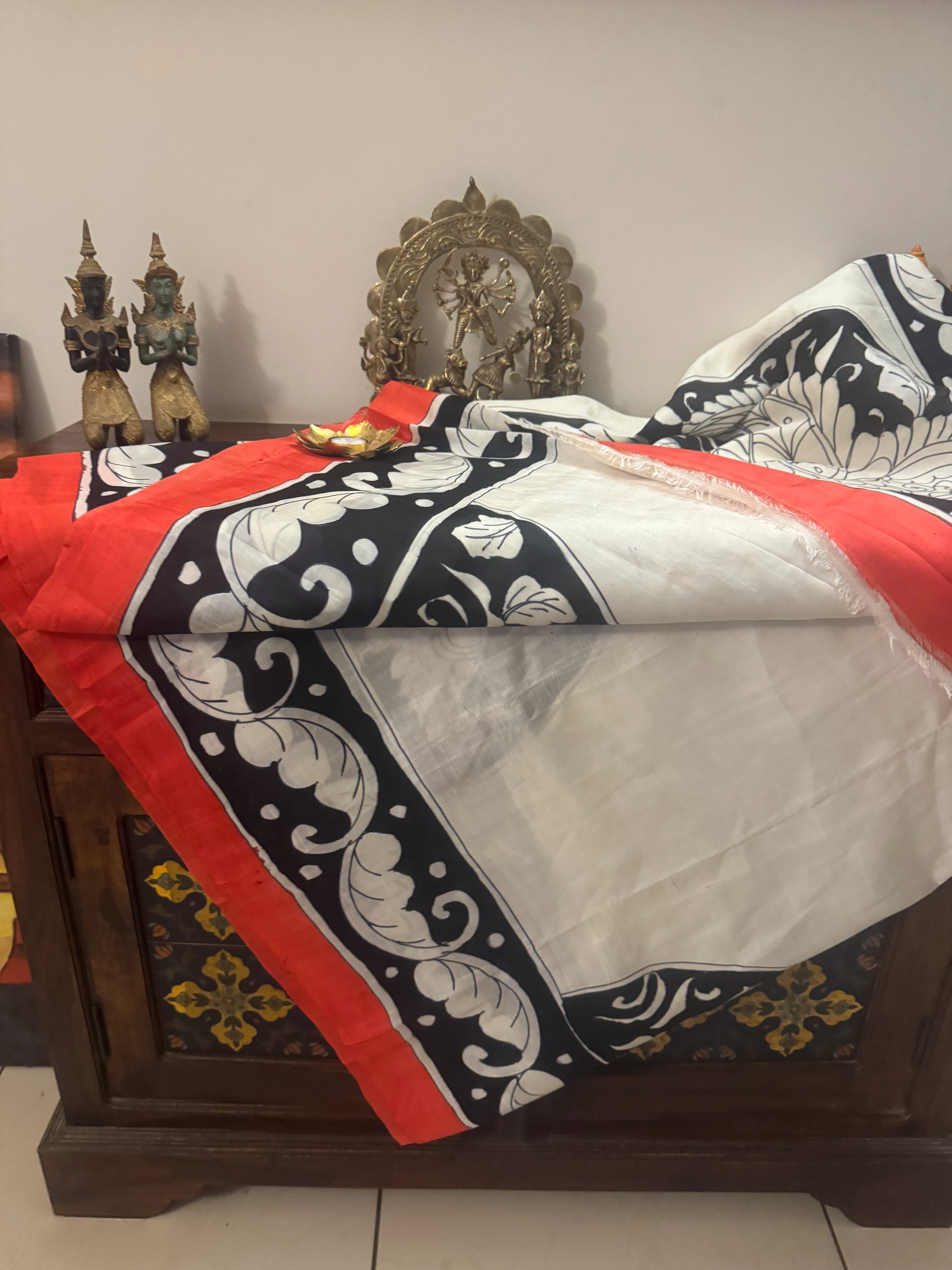
Hand-painted · Kolkata
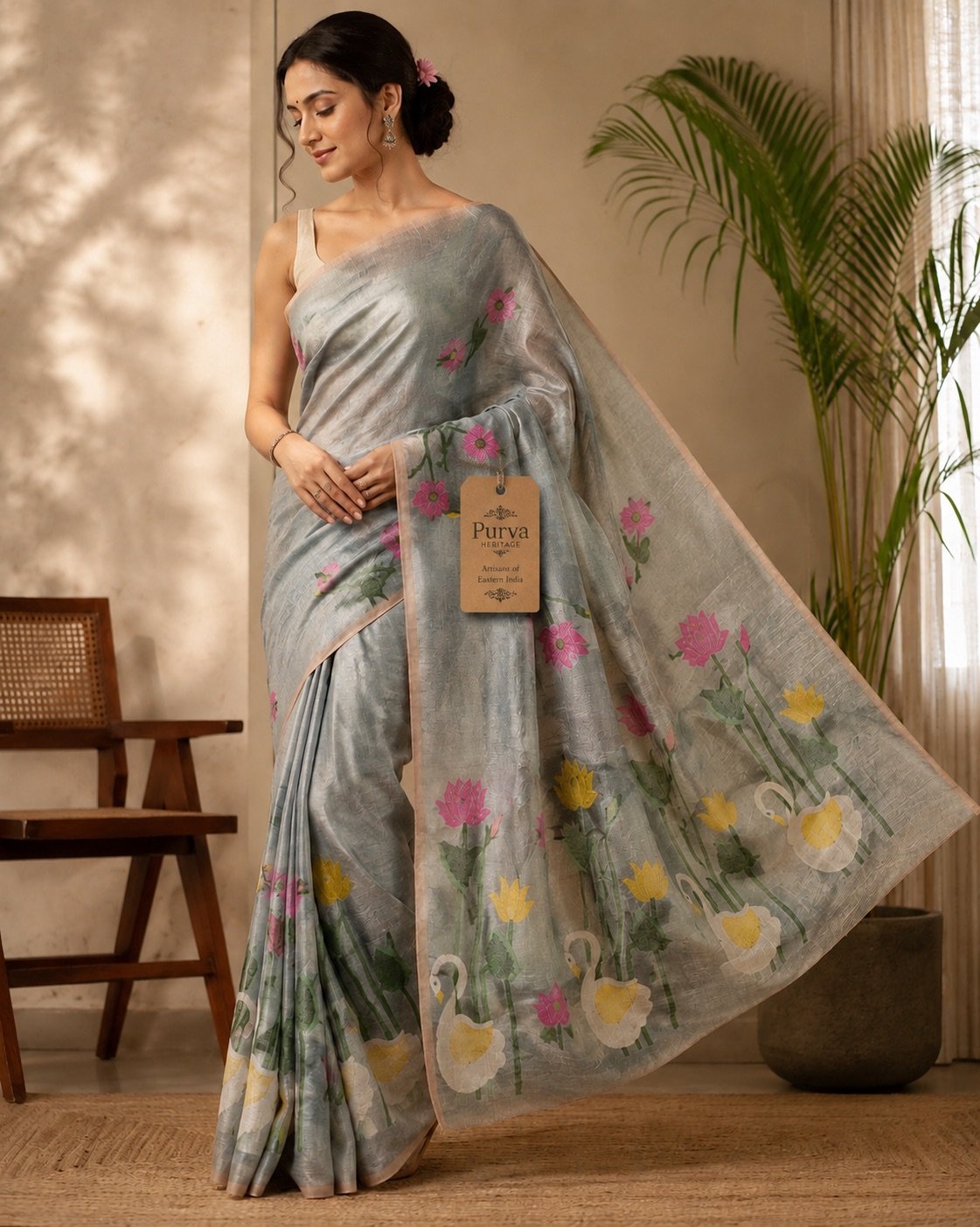
Linen Jamdani · Fulia
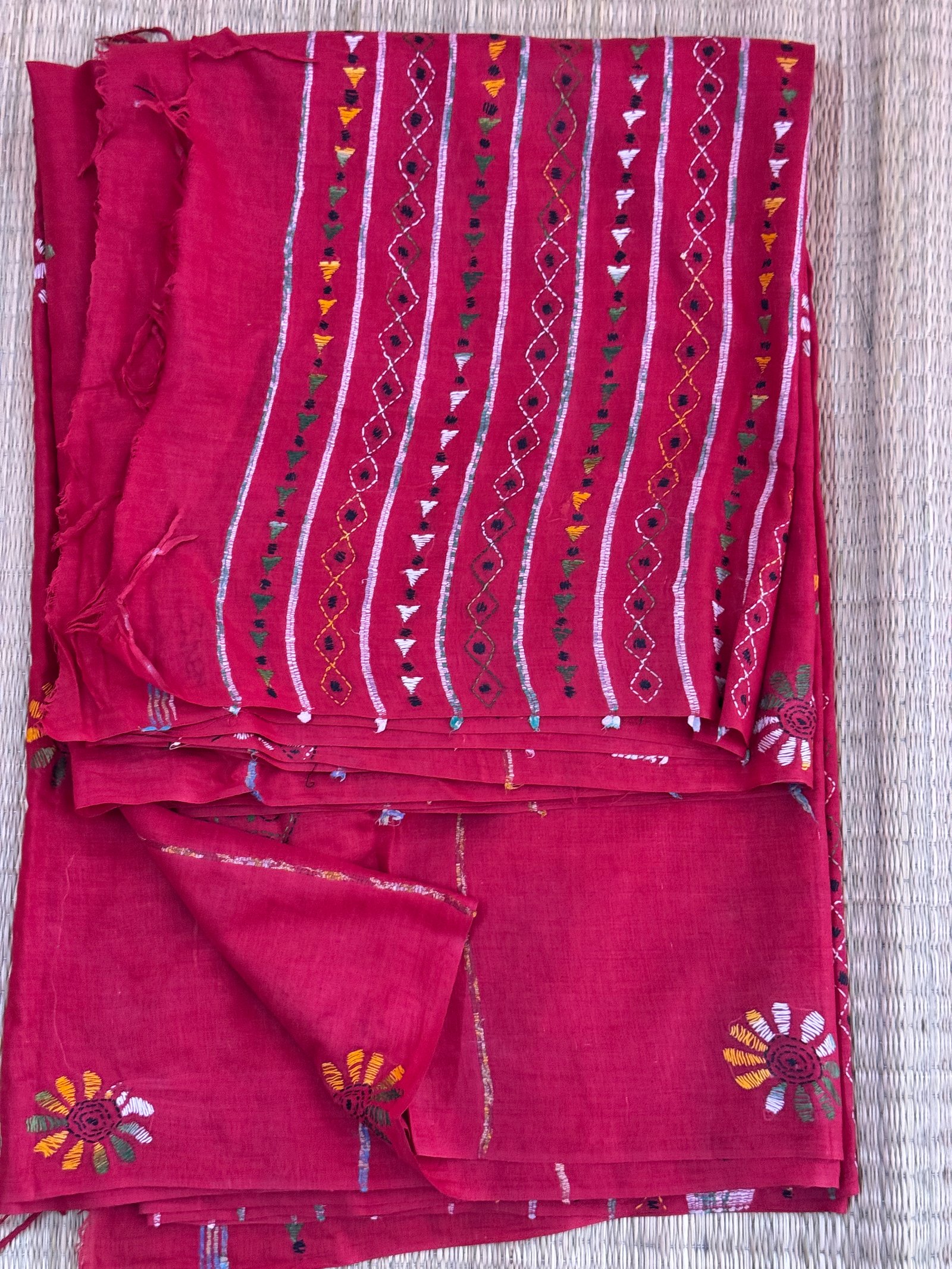
Kantha · Bolpur
Bengal has been a cloth-making region for centuries, its rivers once feeding a muslin trade famous across the world. Weaving in Shantipur can be traced to the 15th century, and it flourished under Mughal patronage alongside muslin and jamdani.
After Partition in 1947, weaver families from Tangail in East Bengal crossed the border and settled in Fulia, next to Shantipur. They brought their own designs, and the two traditions merged into the light, crisp Fulia sarees of today. Jamdani — motifs woven in by hand with extra weft threads, one by one, so they seem to float on the cloth — is their finest work.
Alongside the looms is the needle. Kantha, the running-stitch embroidery of Bolpur and the villages around Santiniketan, began as women layering worn saris into quilts; today it covers whole sarees in birds, flowers and vines. Some of our pieces are hand-painted in Kolkata.
Weaving is a family trade: the loom sits in the front room, and children learn by winding bobbins before they ever throw a shuttle. A plain tant saree may take a weaver two days; a dense jamdani can take weeks. Kantha has long been women’s work, done at home between other chores, and self-help groups across Birbhum now turn it into a steady livelihood.
Most of our sarees come from Fulia and Shantipur in Nadia district, West Bengal — one of the largest handloom clusters in India, known for tant and jamdani. The Santipore saree holds a Geographical Indication, and in 2024 the Tangail Saree of Bengal was registered as a GI of India. Kantha pieces come from Bolpur in Birbhum; hand-painted sarees from studios in Kolkata.
Cotton yarn is bleached or hand-dyed in small batches, then dried and wound onto bobbins.
Thousands of lengthwise threads are wound and drawn through the loom’s heddles in a fixed pattern.
The weft is thrown by hand on a pit loom, with jamdani motifs inlaid thread by thread; Kantha is stitched with a running needle.
The finished saree is washed, checked for evenness and pressed to set its drape.
Dry-clean the first time, or hand-wash separately in cold water with a mild detergent, as hand-dyed colours can bleed. Don’t wring; dry in shade, away from direct sun. Iron jamdani and painted sarees on the reverse. Store folded in muslin rather than plastic, and refold along different lines now and then to avoid permanent creases.