Dhokra · Bikna
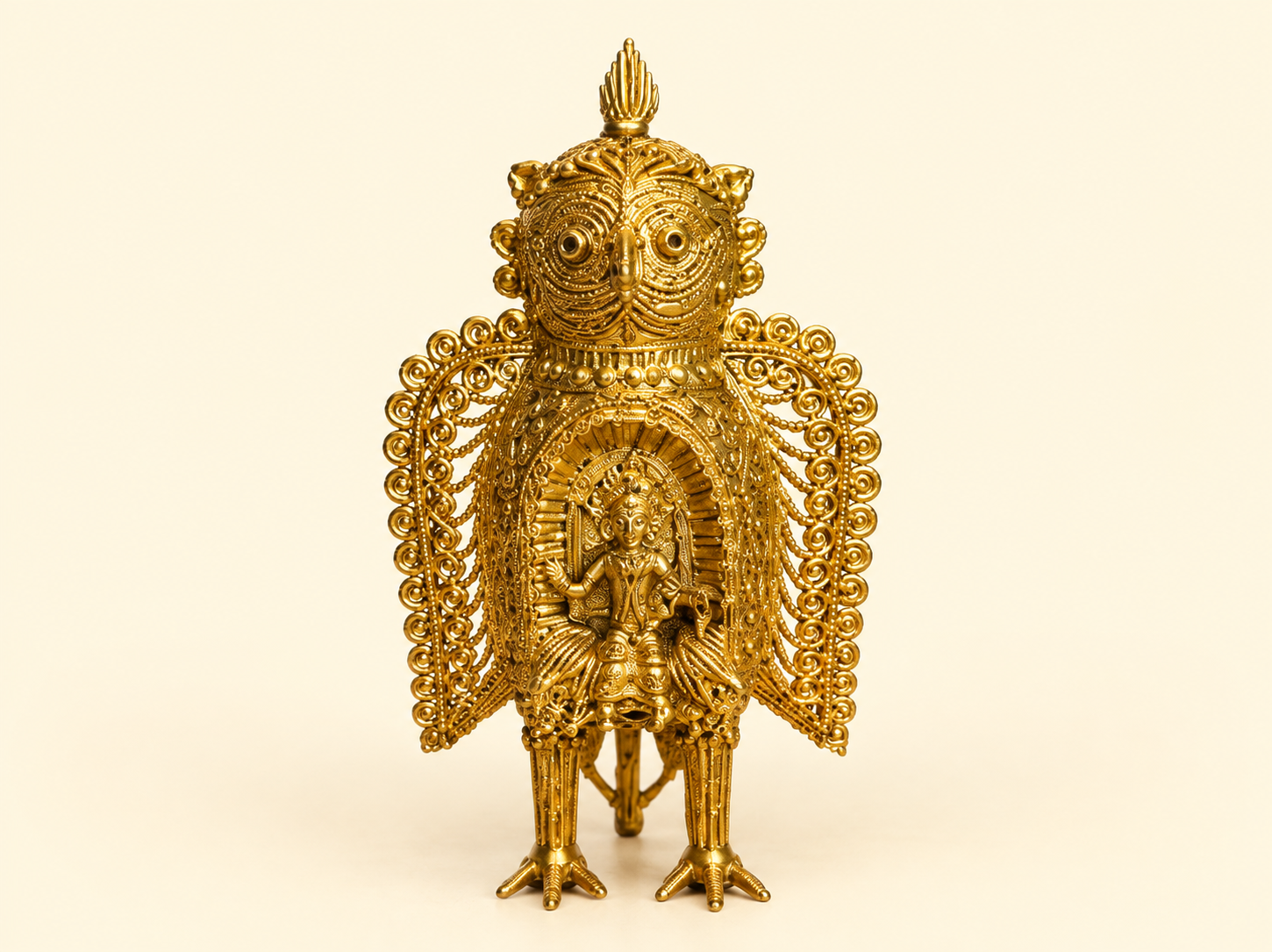
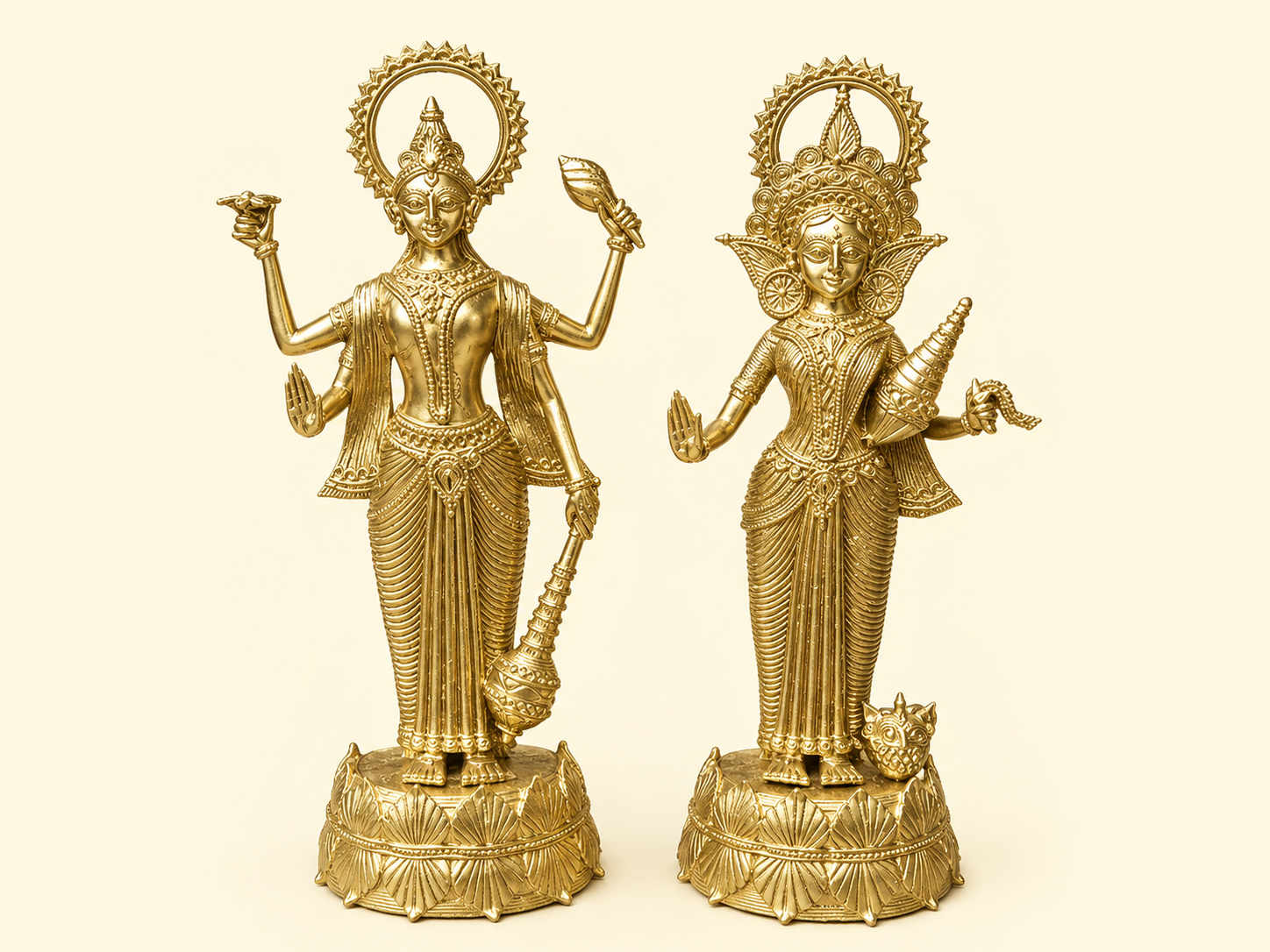
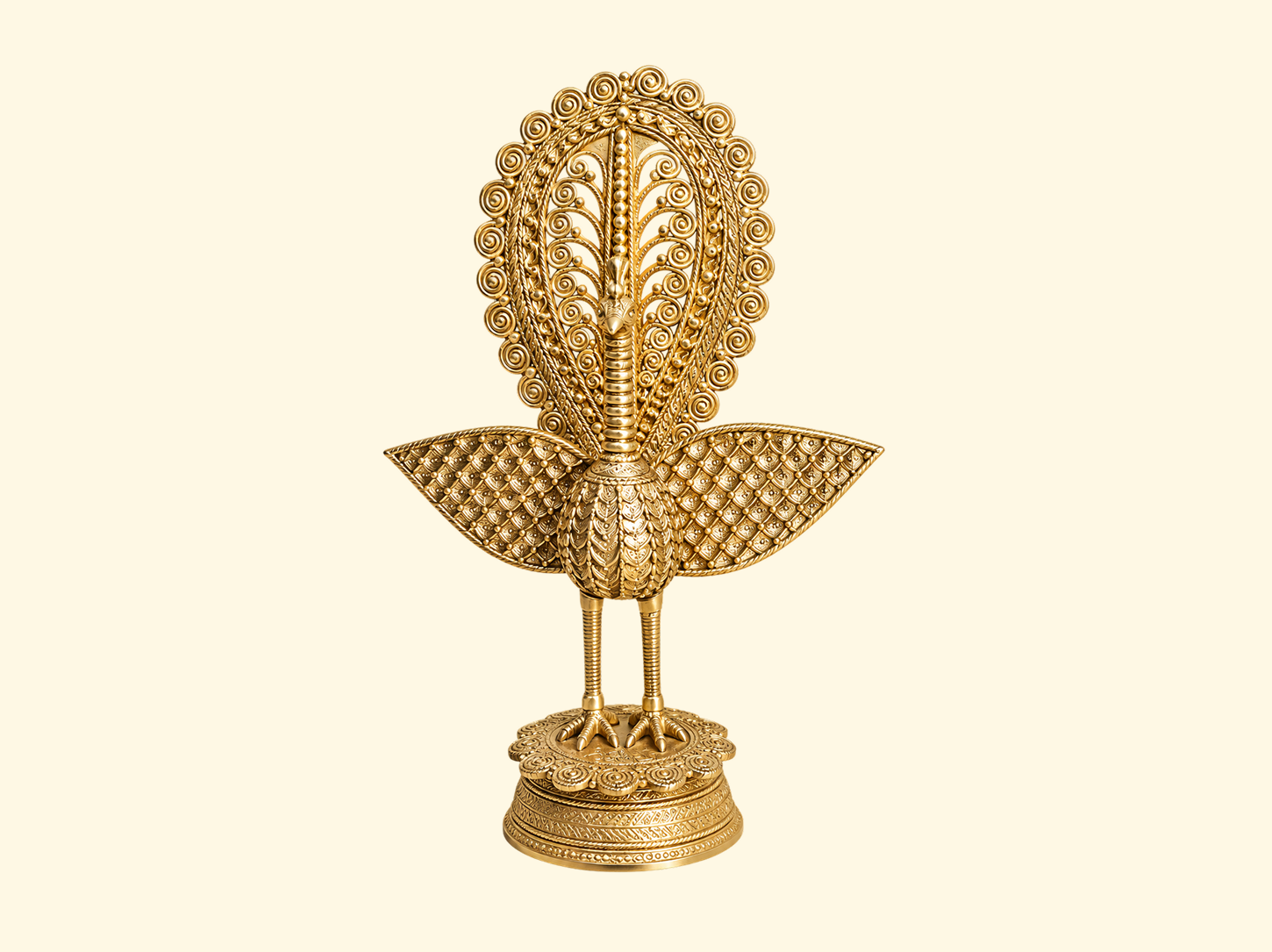
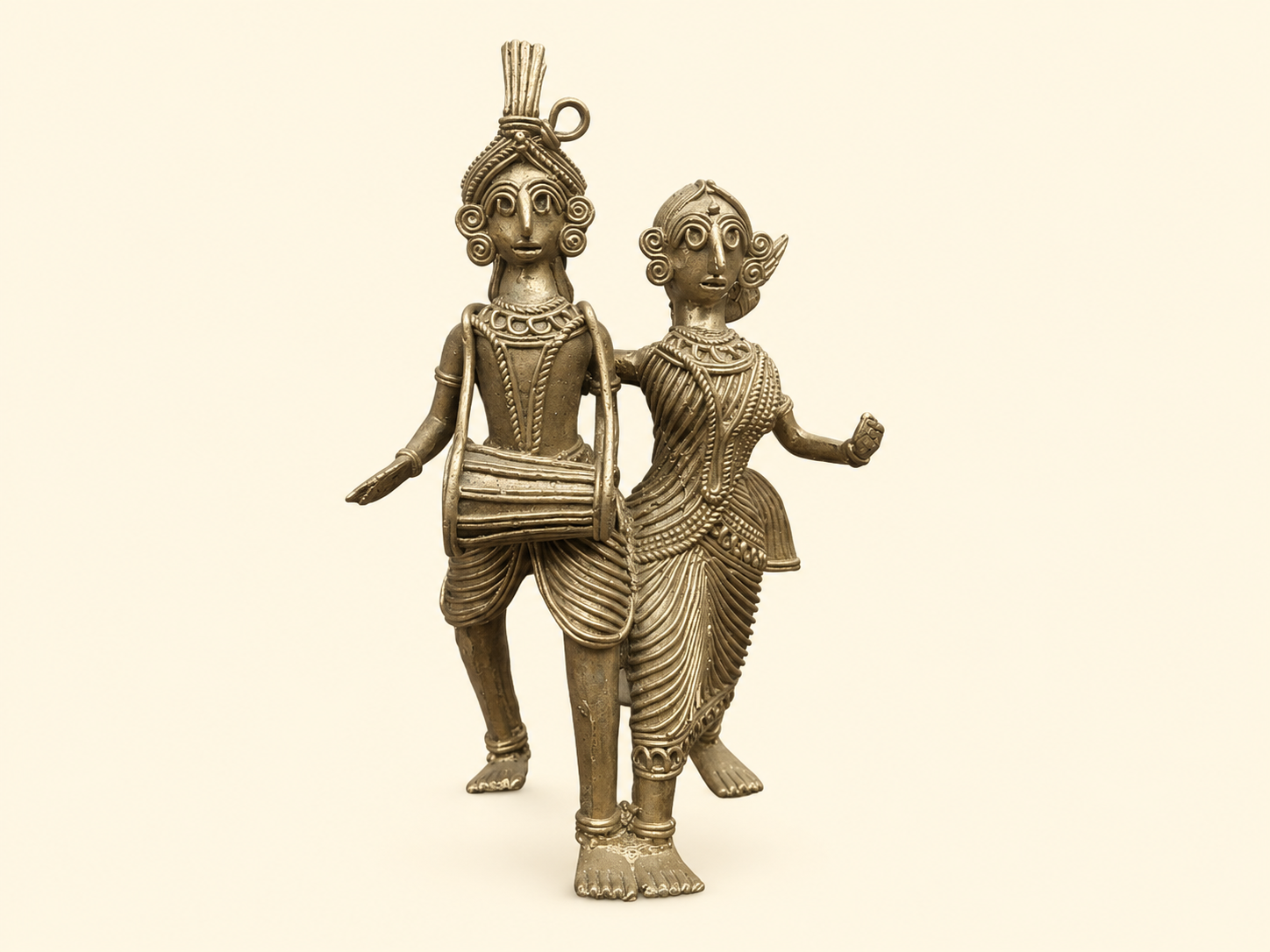
Dhokra is metal cast by the cire perdue, or lost-wax, method — the same technique that gave us the bronze Dancing Girl of Mohenjo-daro, more than four thousand years ago. At Bikna, on the edge of Bankura town, around forty families still build every piece in wax and clay by hand, then pour in molten brass. No mould is ever used twice, so no two pieces are alike.
Dhokra · Bikna
₹2,200
Dhokra · Bikna
₹2,800
Dhokra · Bikna
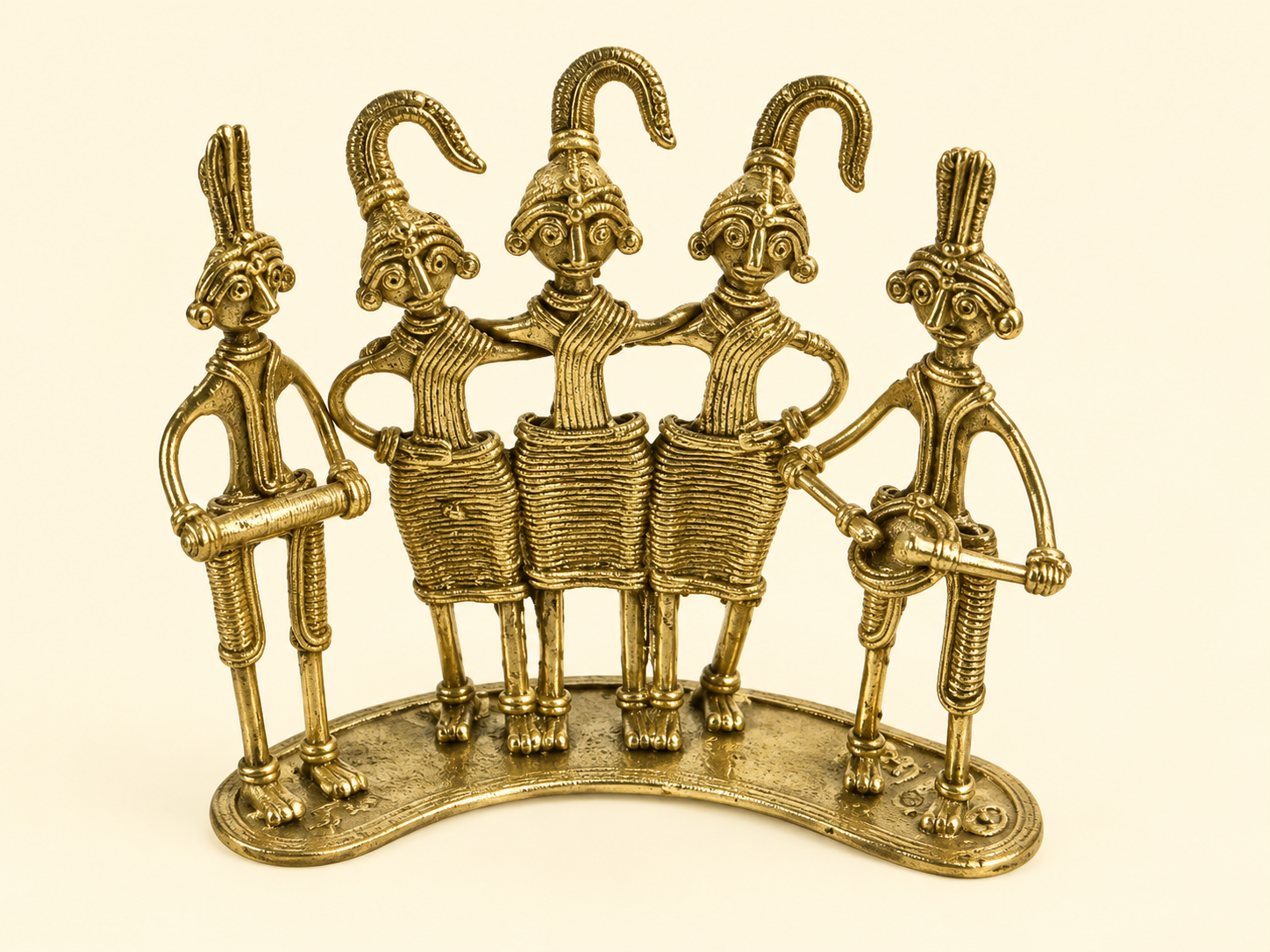
Dhokra · Bikna
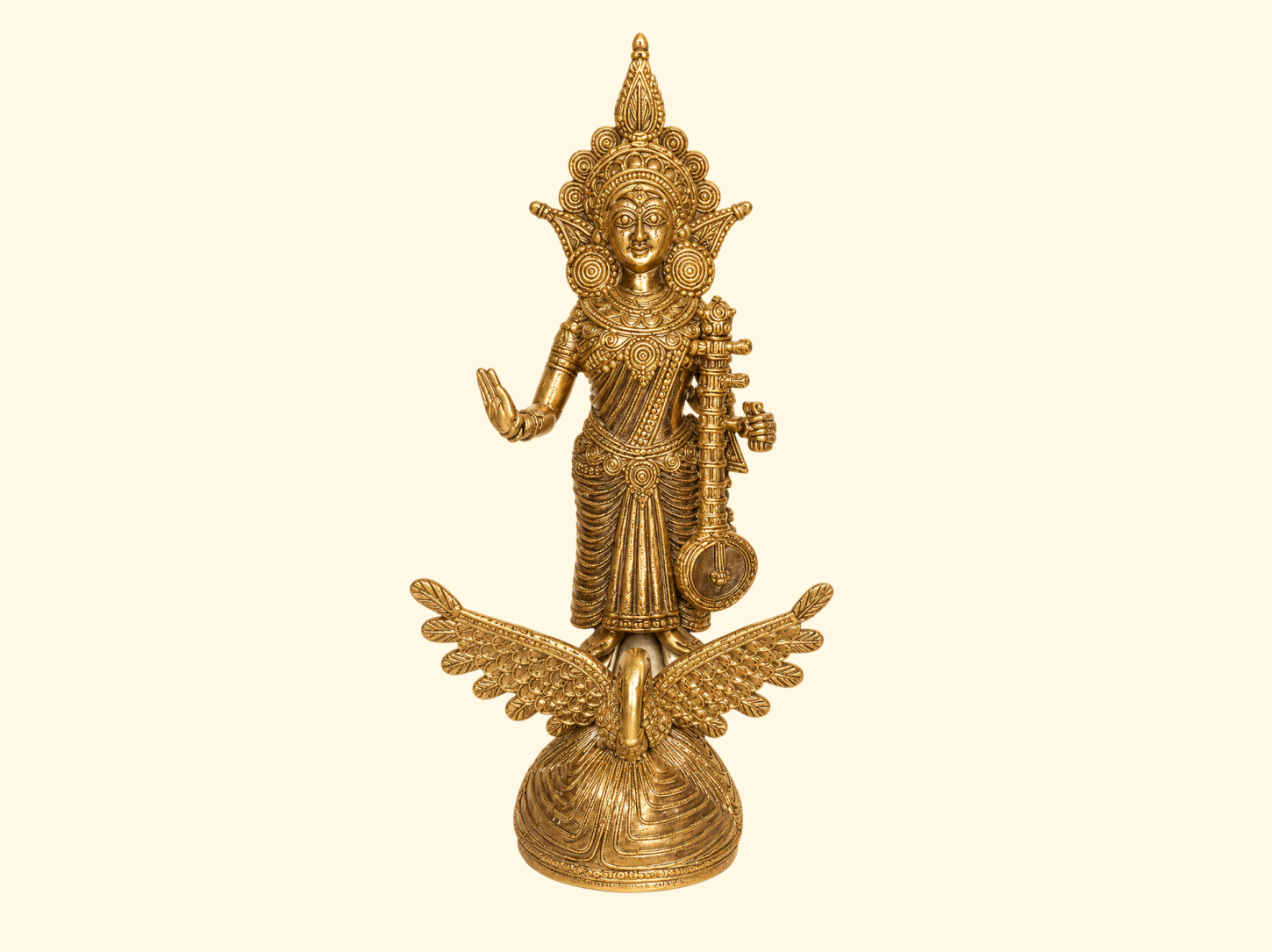
₹3,200
Dhokra · Bikna
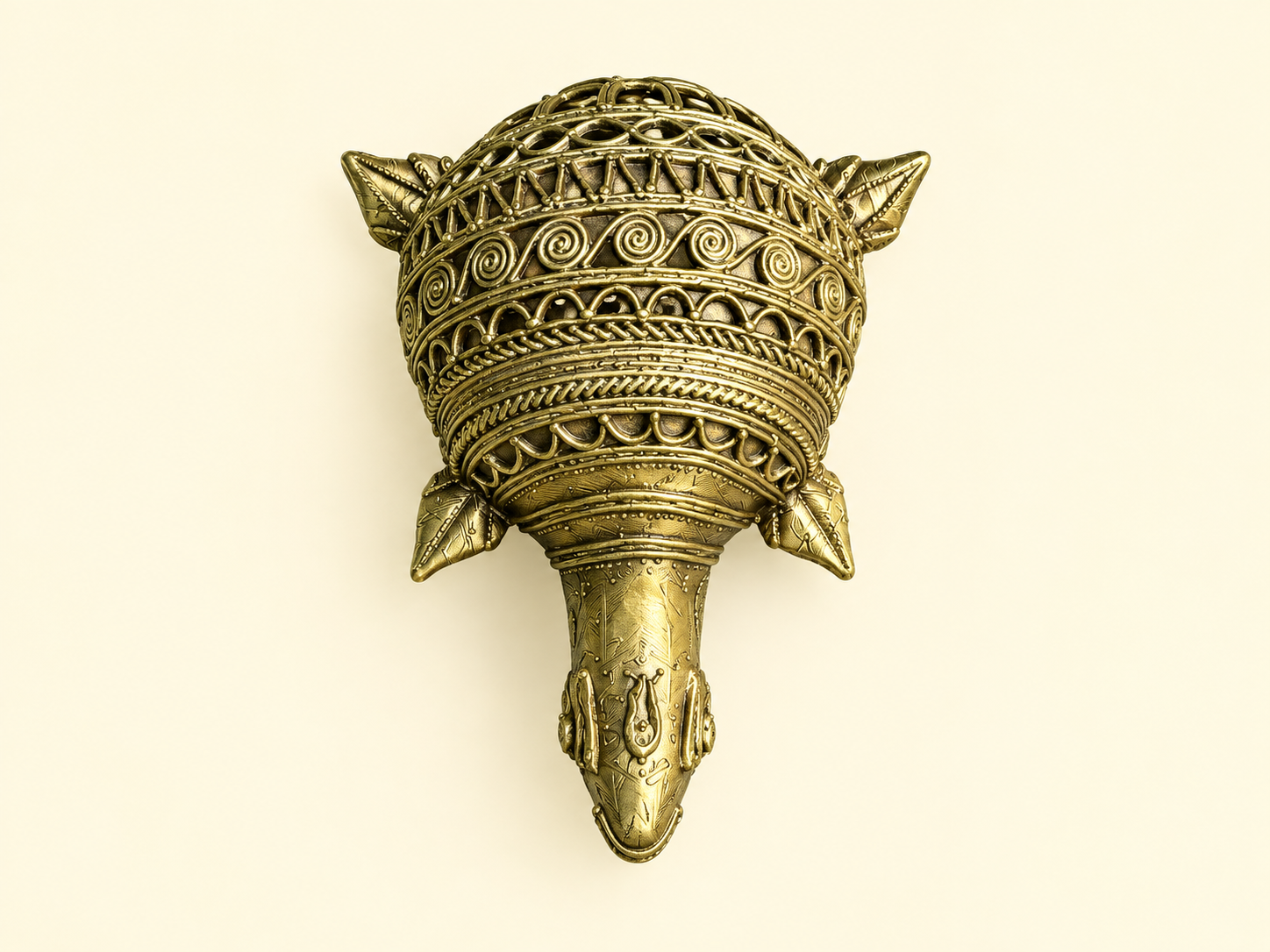
₹1,600
Dhokra · Bikna
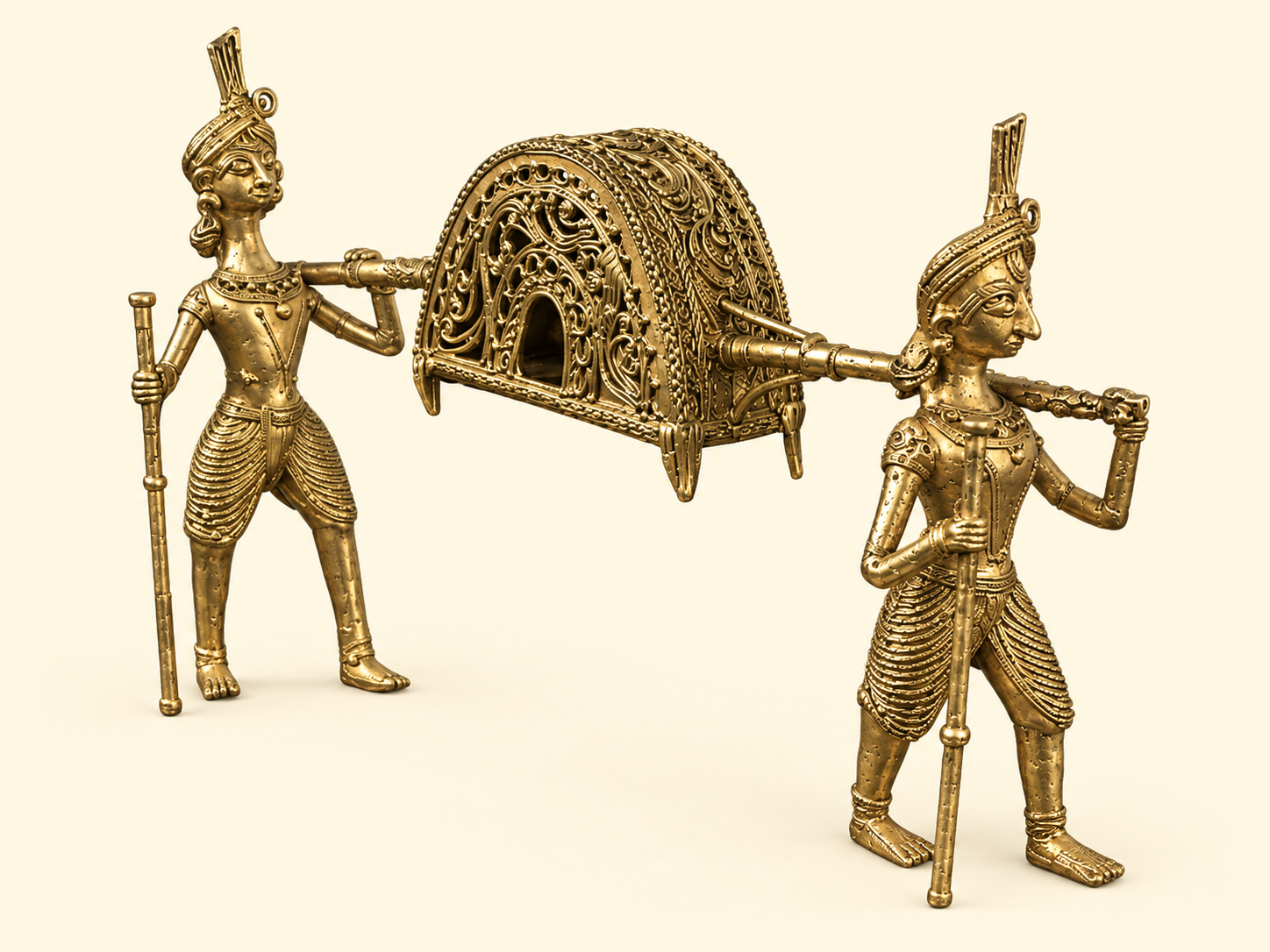
Dhokra · Bikna
₹3,500
Dhokra · Bikna
₹6,500
Dhokra · Bikna
₹2,400
Dhokra · Bikna

Dhokra · Bikna
Dhokra · Bikna
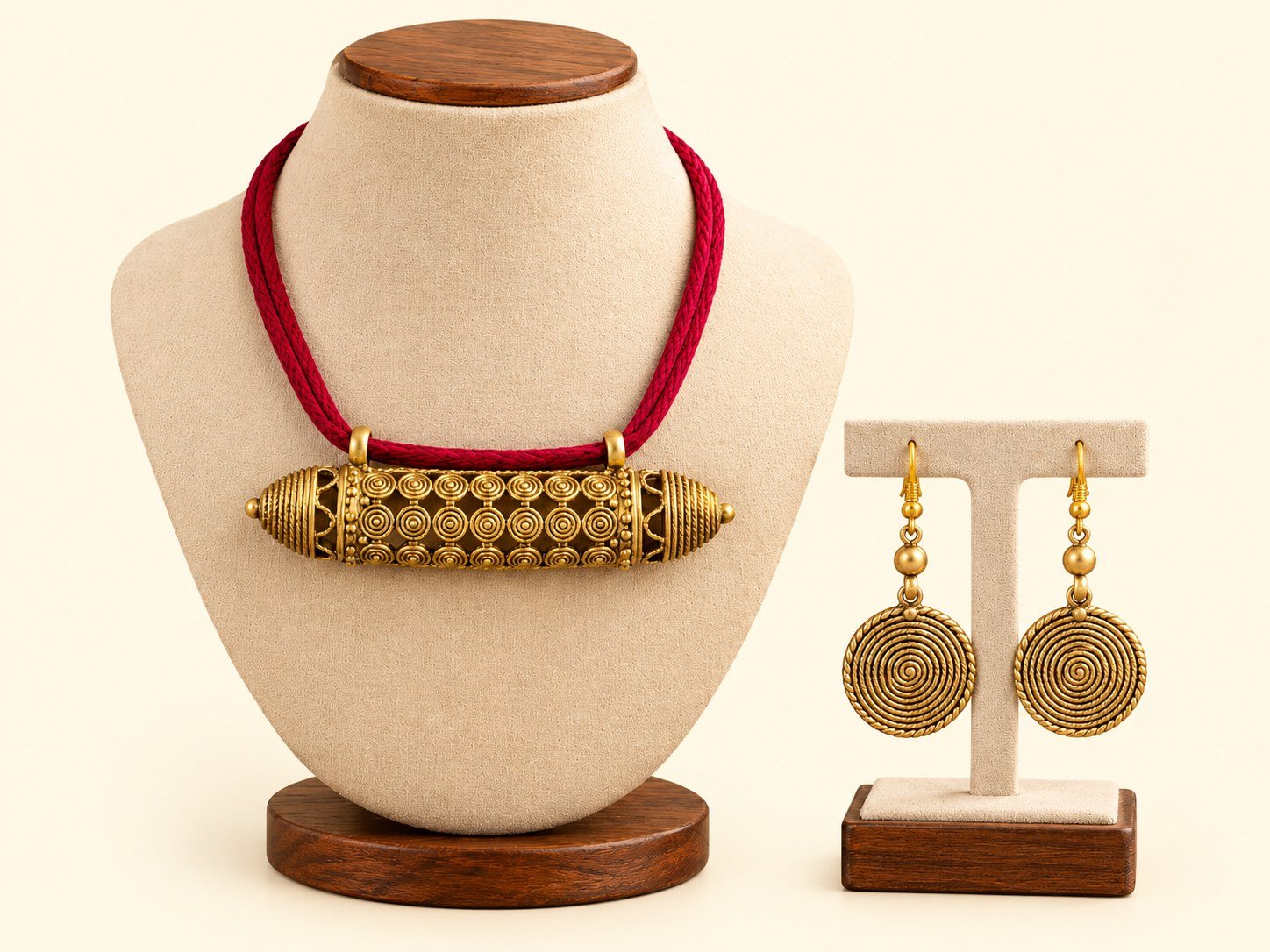
Dhokra · Jewellery
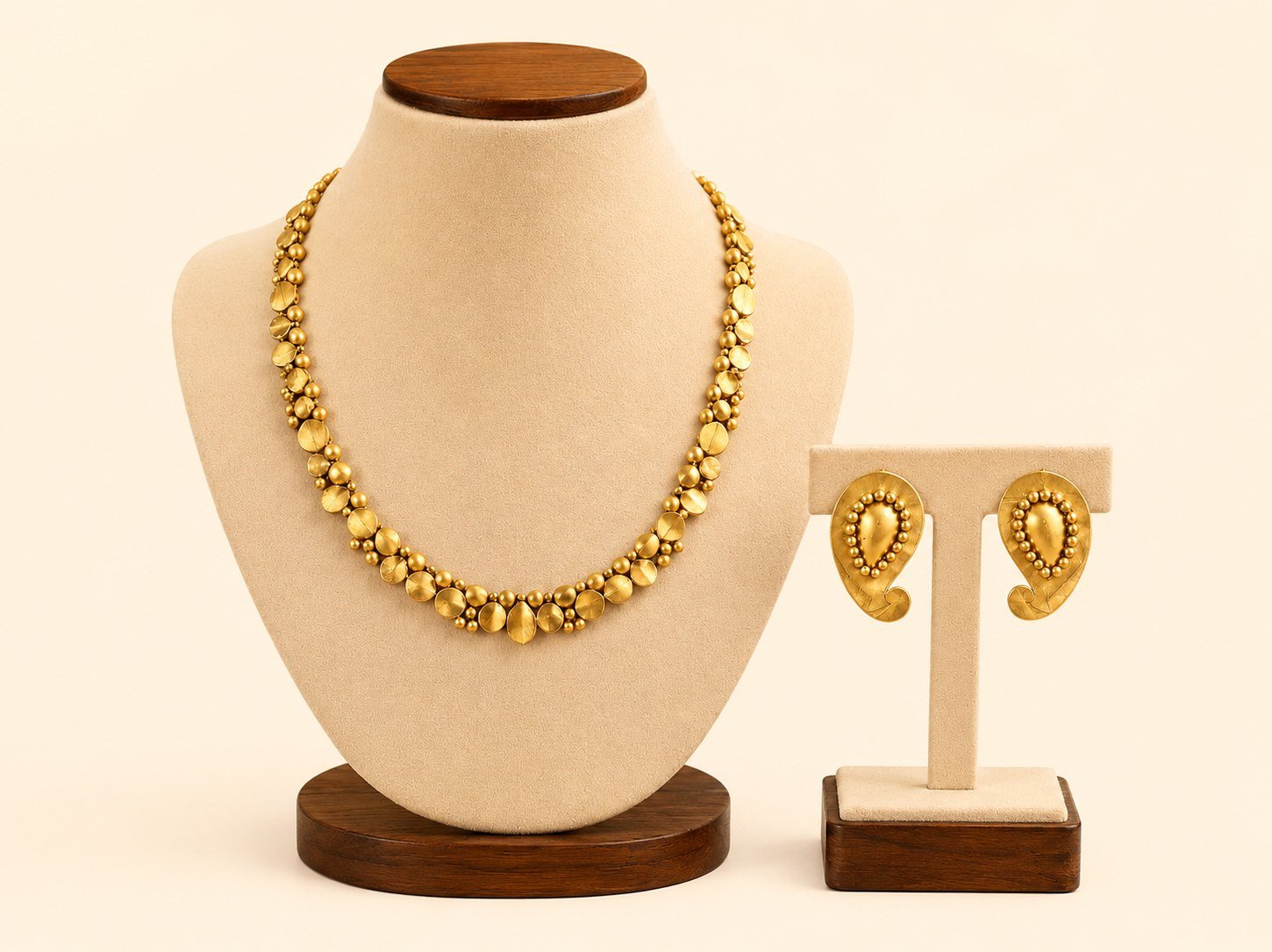
Dhokra · Jewellery
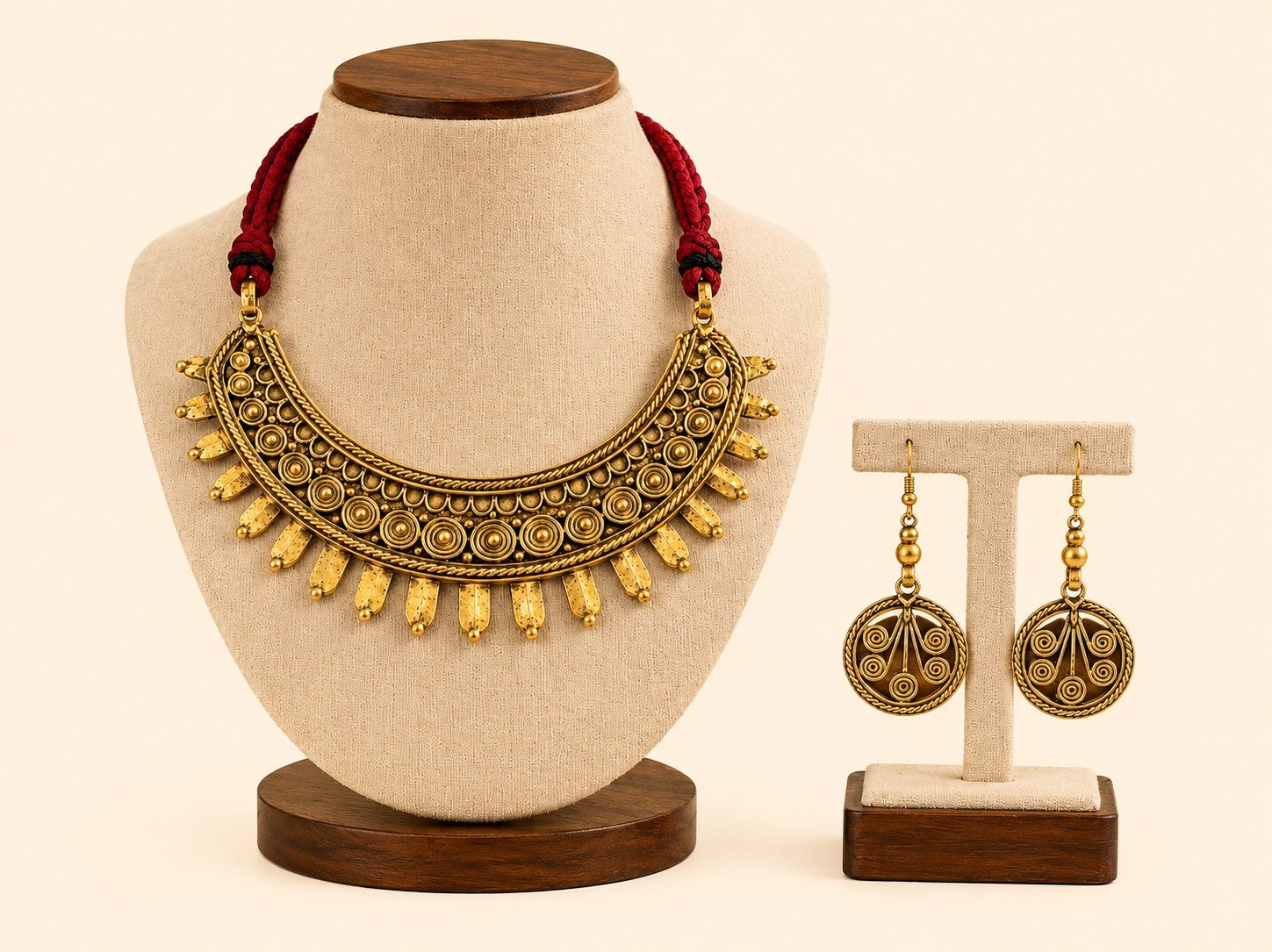
Dhokra · Jewellery
Dhokra (also written dokra) is non-ferrous metal casting by the lost-wax method. A figure is modelled in wax over a clay core, wrapped in clay, and fired: the wax melts and runs out, and molten brass is poured into the space it leaves. The mould is then broken open to free the piece, so every Dhokra casting is one of a kind.
The technique is among the oldest in the world — the Dancing Girl of Mohenjo-daro was cast this way around 2500 BCE. In eastern India it was kept alive by itinerant metalsmiths, the Dhokra Damar, who travelled from village to village casting lamps, measuring vessels, ritual figures and jewellery for tribal and rural patrons.
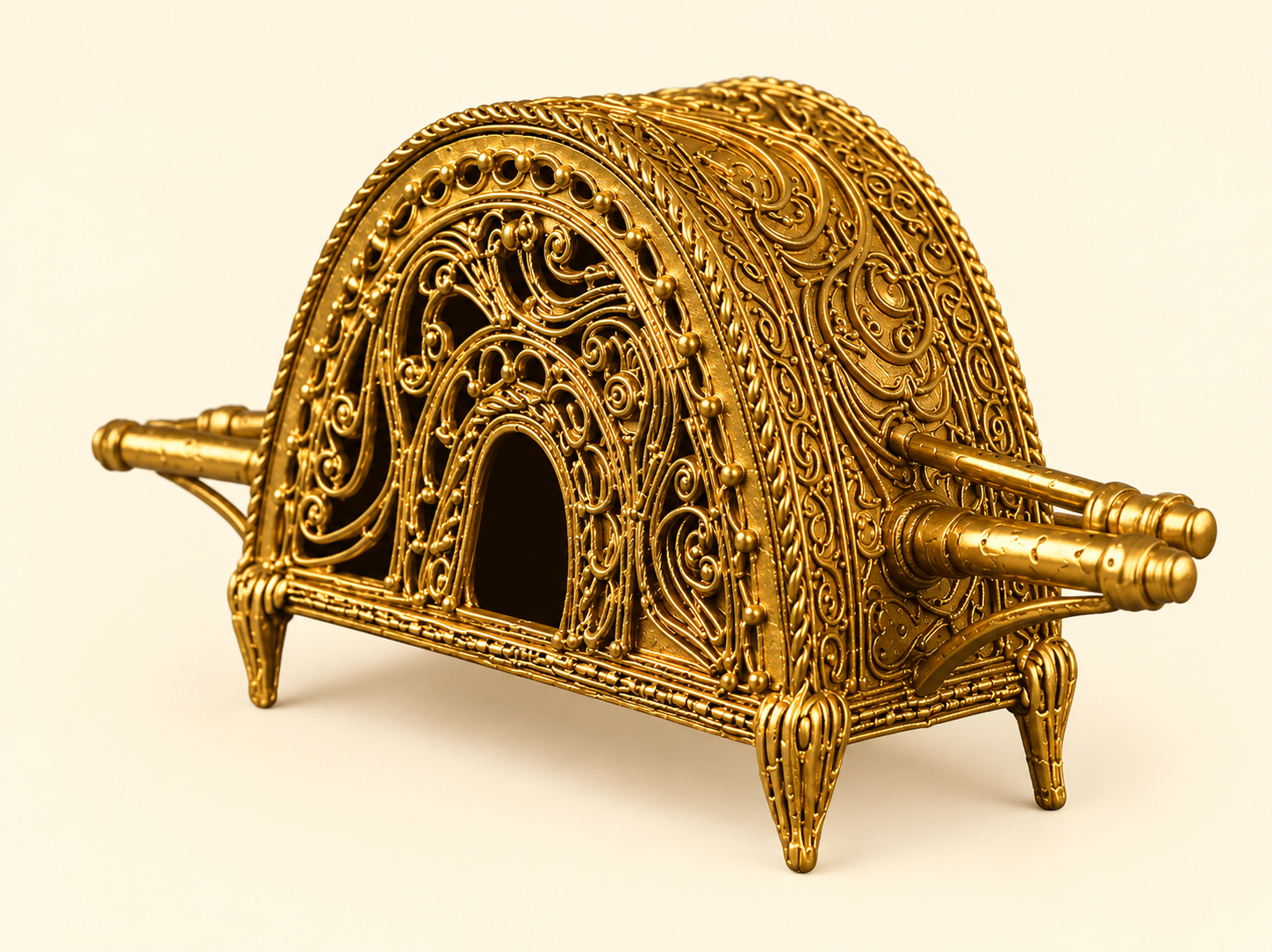
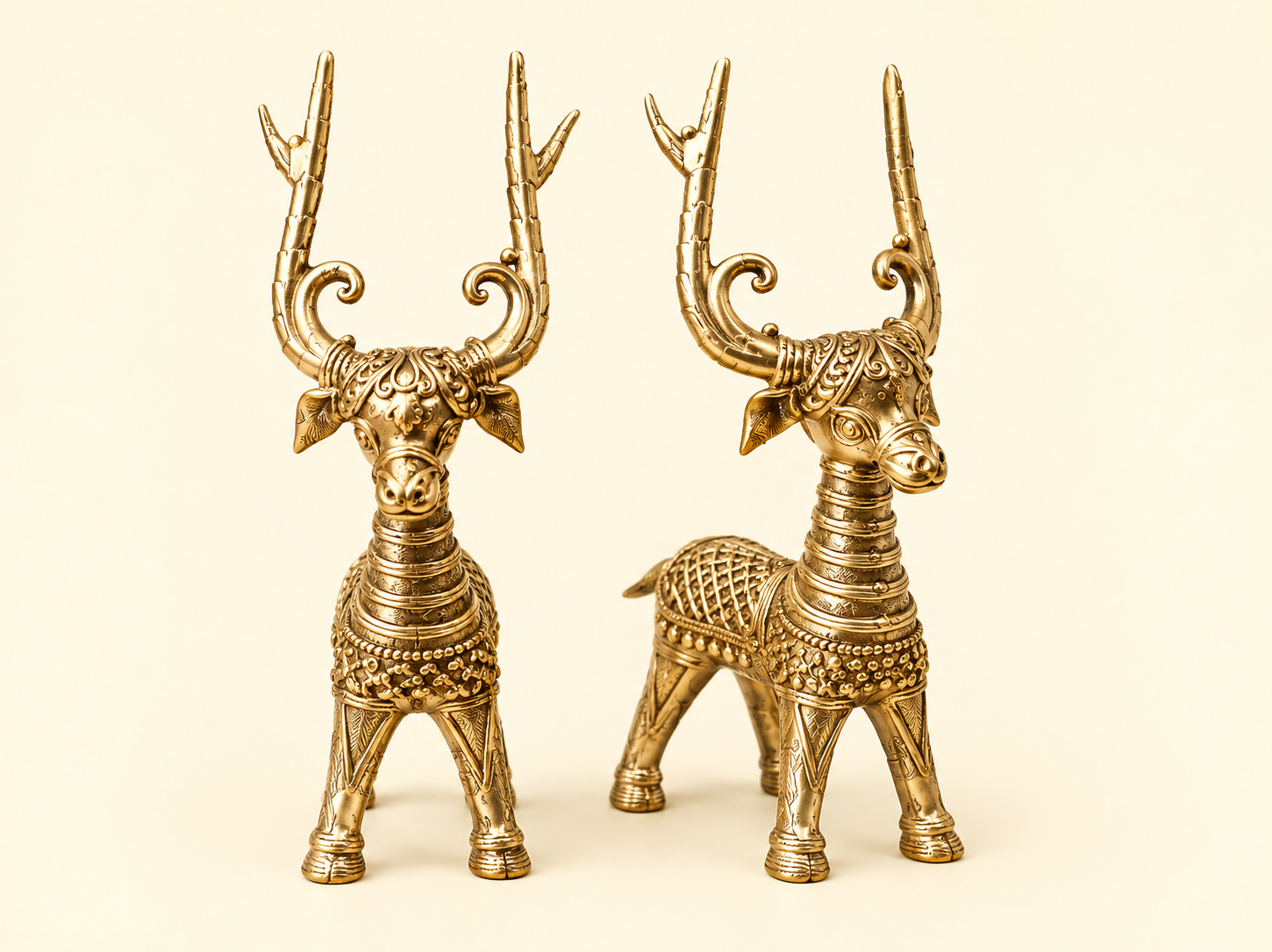
Dhokra’s look is unmistakable: surfaces built up from fine wax threads, coiled and plaited, so the finished metal seems woven. Horses, elephants, owls, tribal dancers and musicians, deities and the Bengali palki are its classic forms. Bengal Dokra received a Geographical Indication tag in 2018.
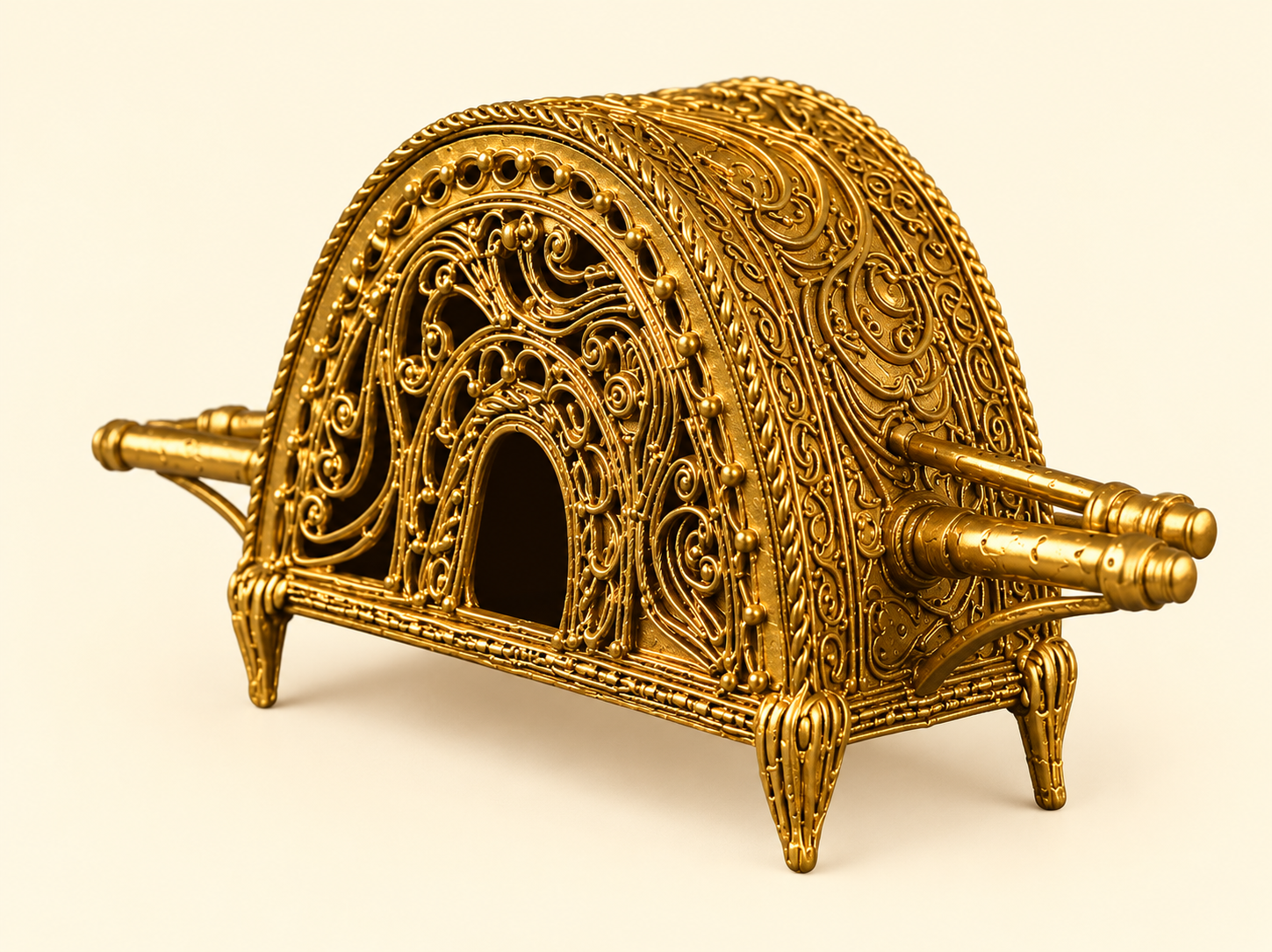
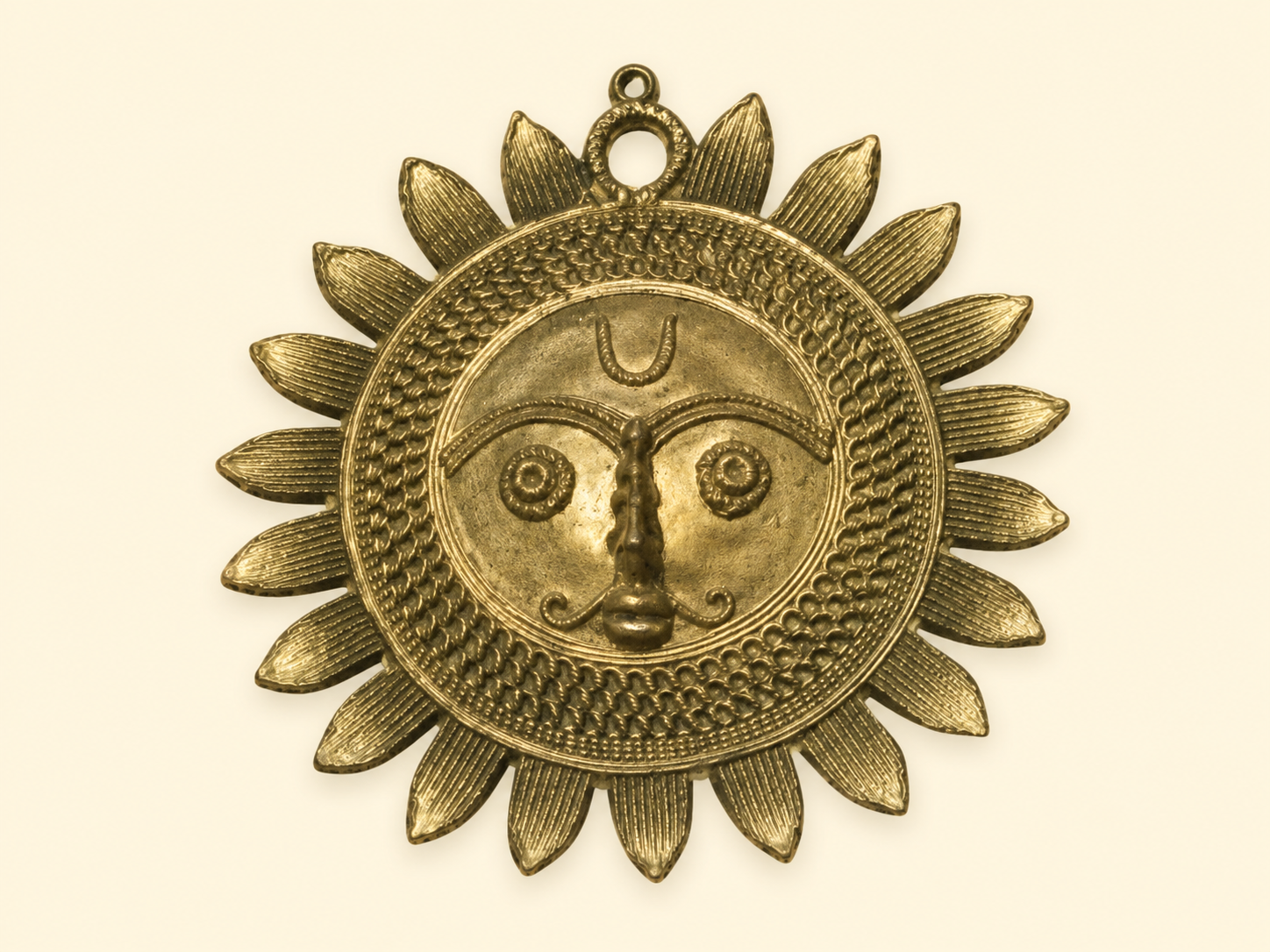
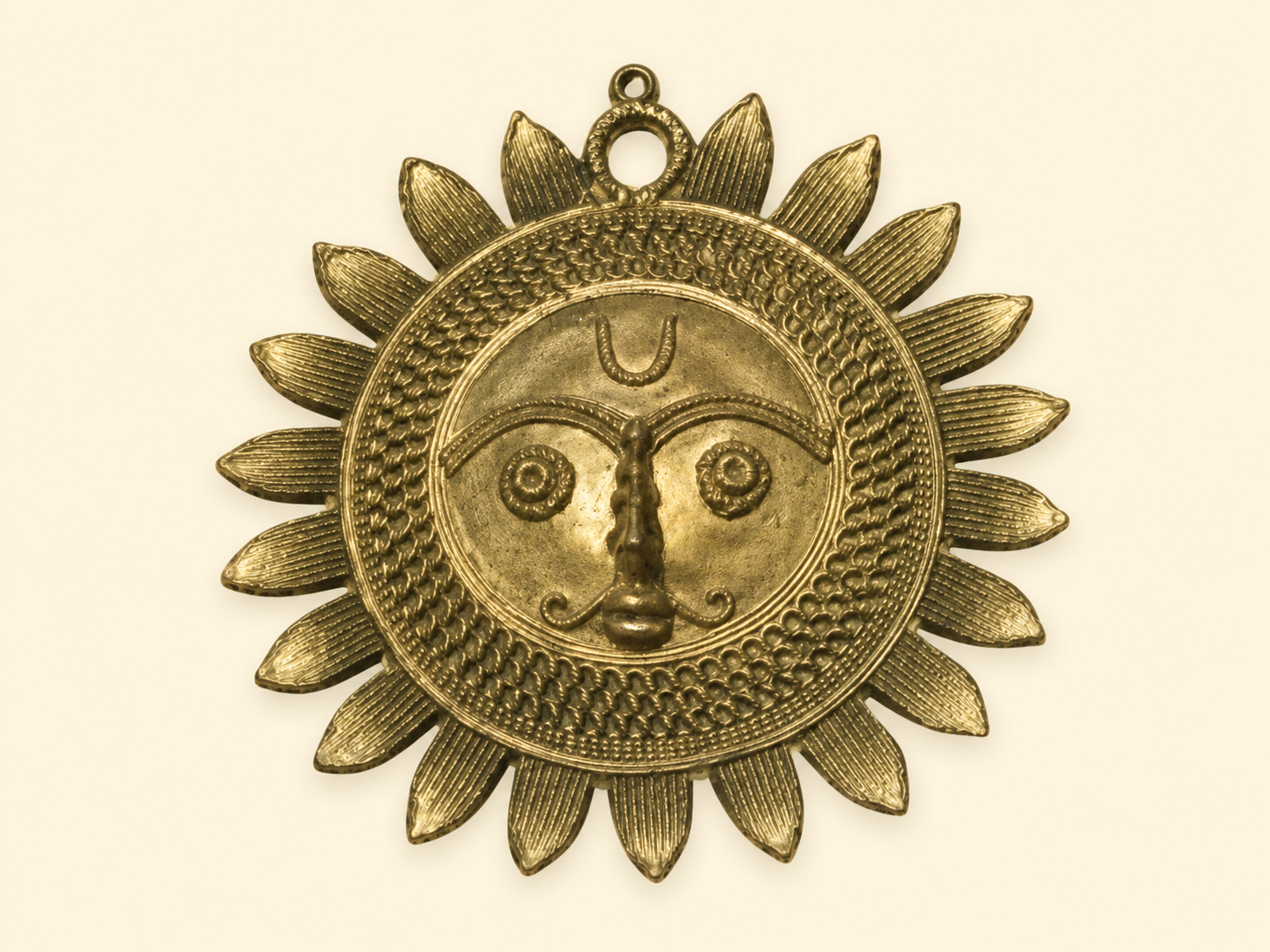
What sets Bikna apart is its jali — net-like filigree so fine and even it can look machine-made, though every strand is a hand-rolled wax thread. It shows best in the village’s palanquins, sun discs and wall hangings. The late Juddha Karmakar of Bikna received the President’s Award for his work in 1988; the village’s artisans still count him as their master.
Our Dhokra comes from Bikna, a craft village (Shilpa Danga) on the outskirts of Bankura town in West Bengal, where about 42 Karmakar families work the craft. The elders say it has been practised here for 150 years or more. The other great Bengal centre is Dariapur in Bardhaman; related traditions live on in Jharkhand, Odisha and Chhattisgarh.
A rough form is modelled in riverbed clay mixed with rice husk, and dried in the sun.
Beeswax mixed with resin (dhuna) is pressed into thin threads and laid over the core in coils and nets.
The wax figure is coated in layers of clay with a pouring channel, then heated so the wax melts out.
Molten brass is poured into the hollow; once cool, the clay is broken away and the piece is cleaned and polished.
Dhokra is solid brass with a deliberately antique finish, so it darkens gently with age. Dust with a dry soft brush, working into the thread-work. Avoid water and chemical polish, which can strip the patina; if a piece needs brightening, rub the raised surfaces lightly with a dry cloth. Keep it indoors and away from damp.