Carved Brass · Bankura
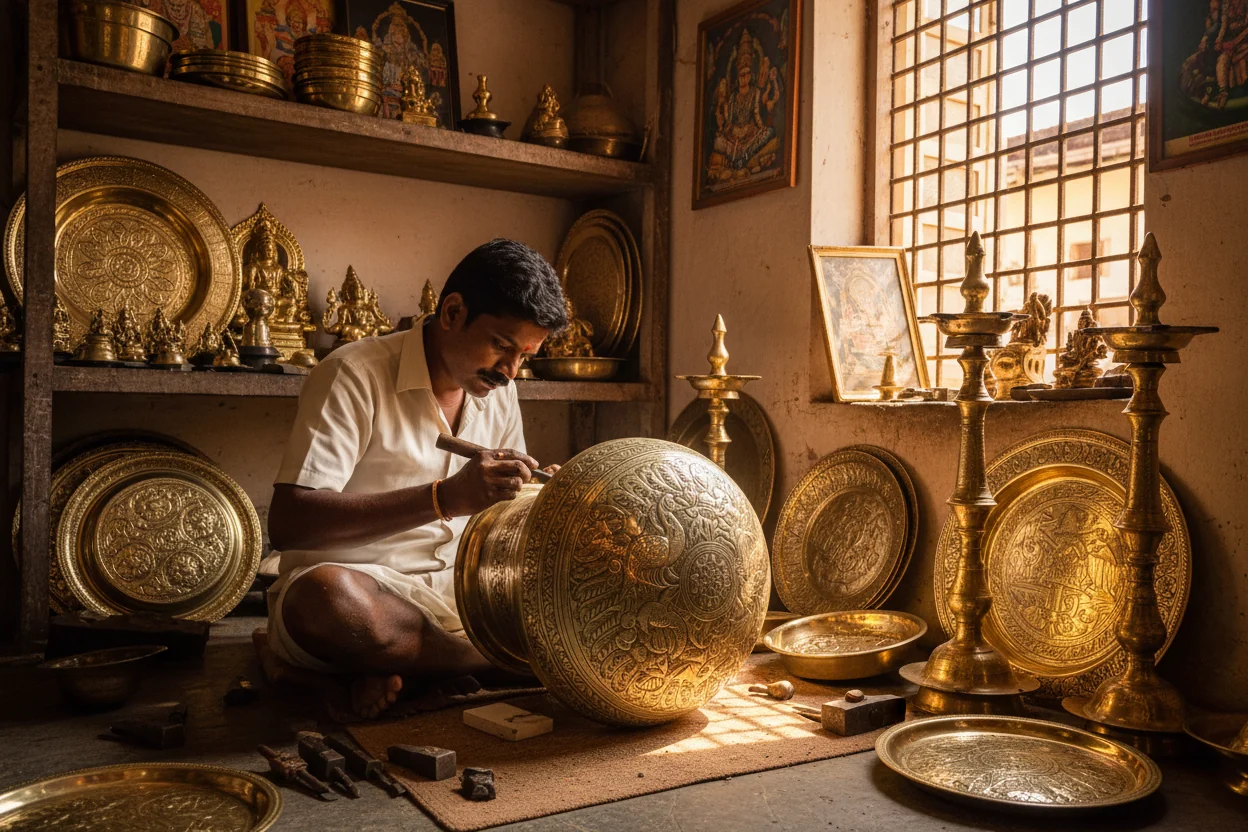
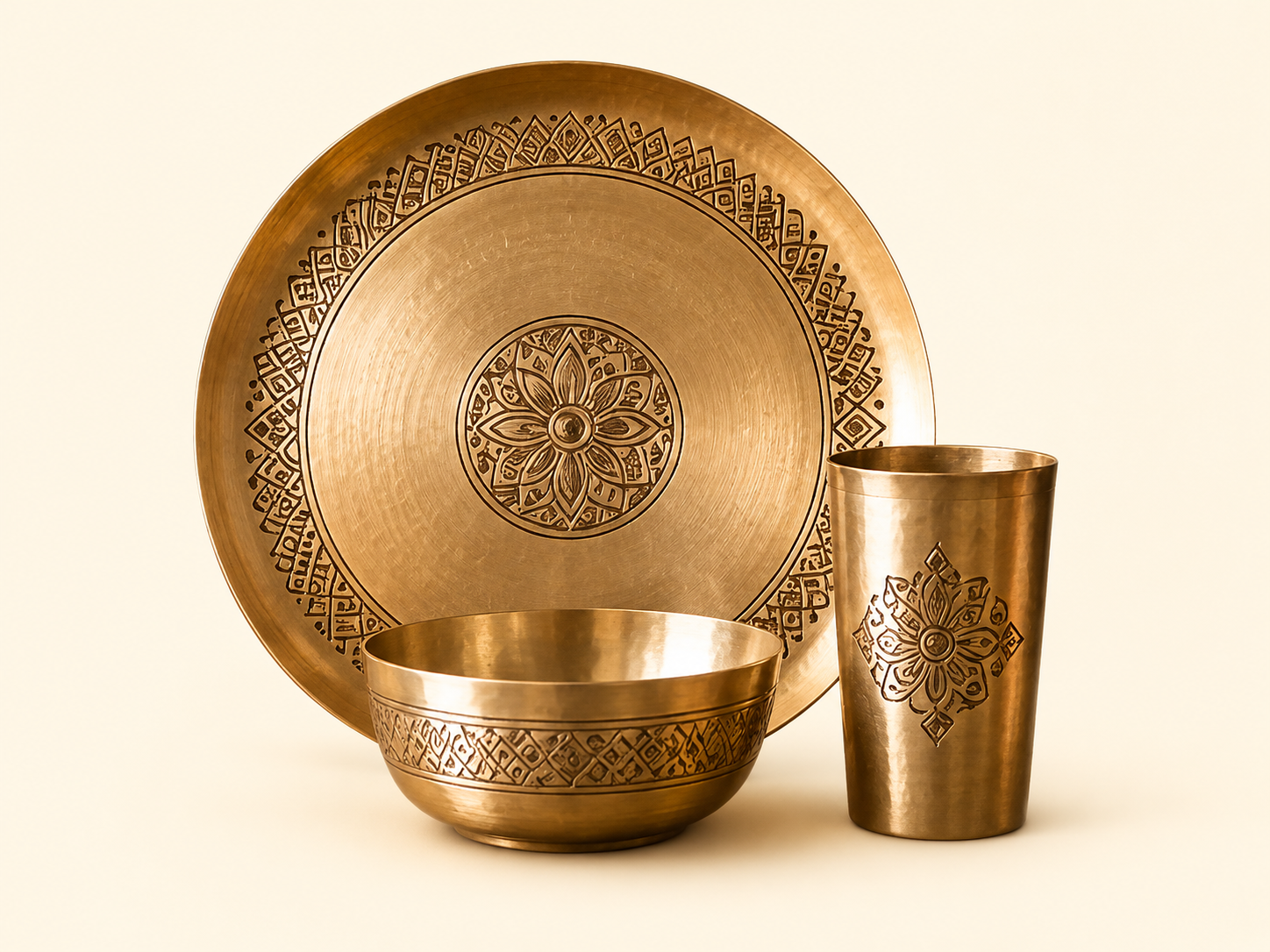
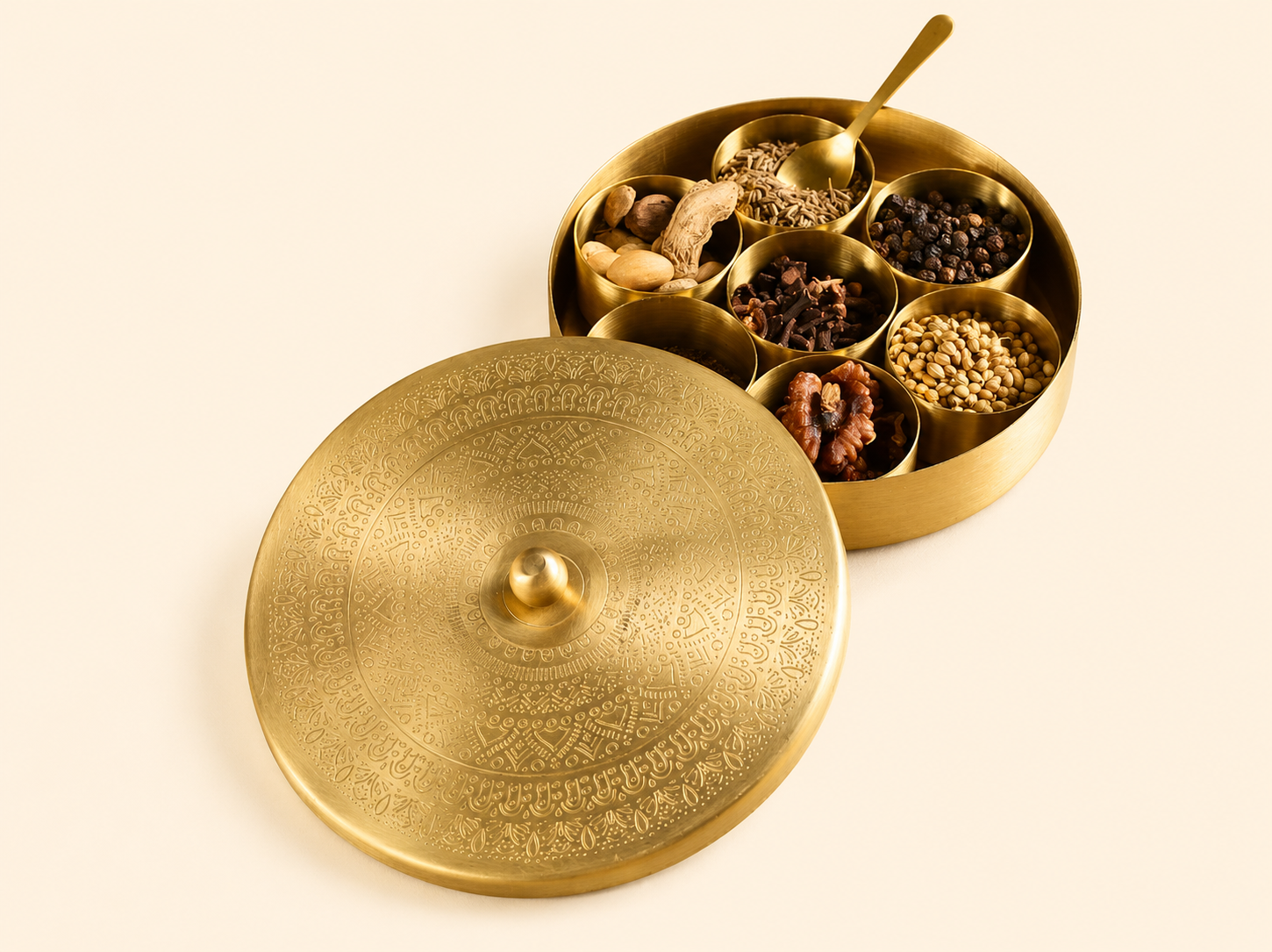
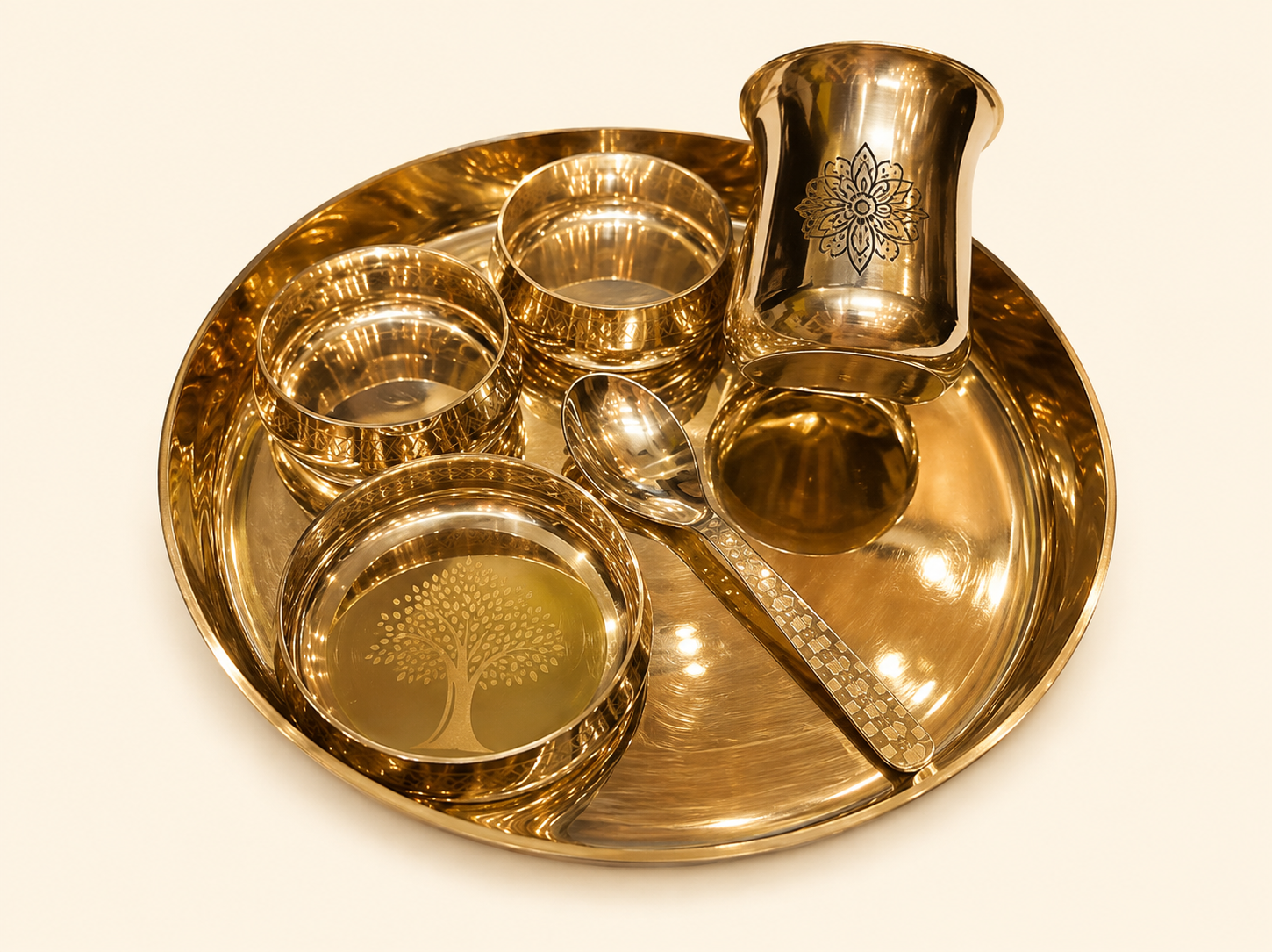
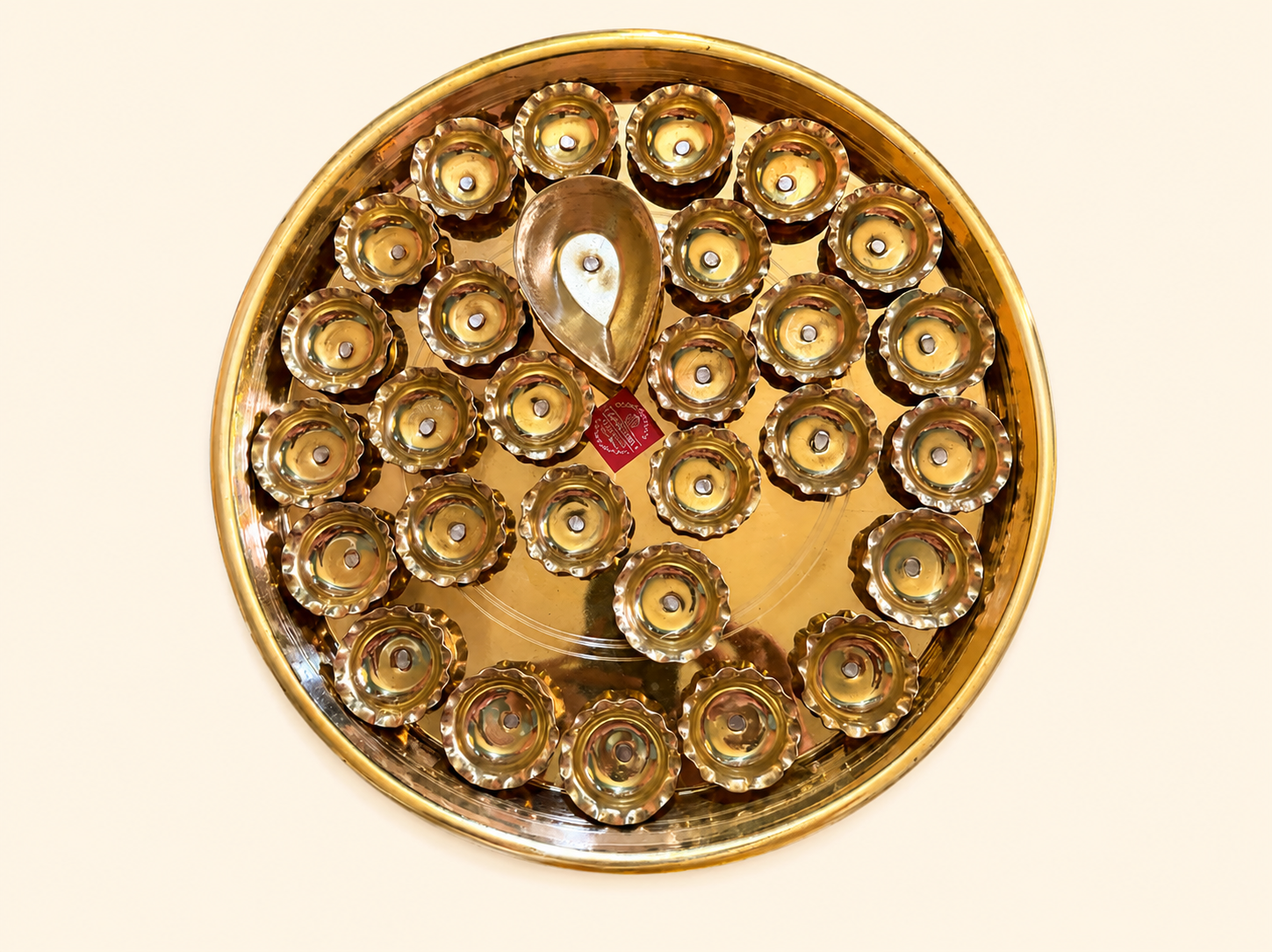
Bengal has worked brass and bell-metal for as long as it has had temples and kitchens to fill. The water pot, the oil lamp, the plate a guest was served on, the vermilion box a bride carries — each was made by the Kansari, the hereditary metalsmith. In Bankura and Bardhaman they still cast, beat and engrave by hand: kansa thalis, engraved masala boxes, the brass-bound sherpai and the gachkouto.
Carved Brass · Bankura
Carved Brass · Bankura
Carved Brass · Bankura
₹4,500
Carved Brass · Birbhum
Carved Brass · Bankura
₹3,200
Carved Brass · Bankura
Carved Brass · Bankura
₹11,900
Carved Brass · Bankura

Carved Brass · Bankura
₹2,800
Carved Brass · Bankura
Carved Brass · Bankura
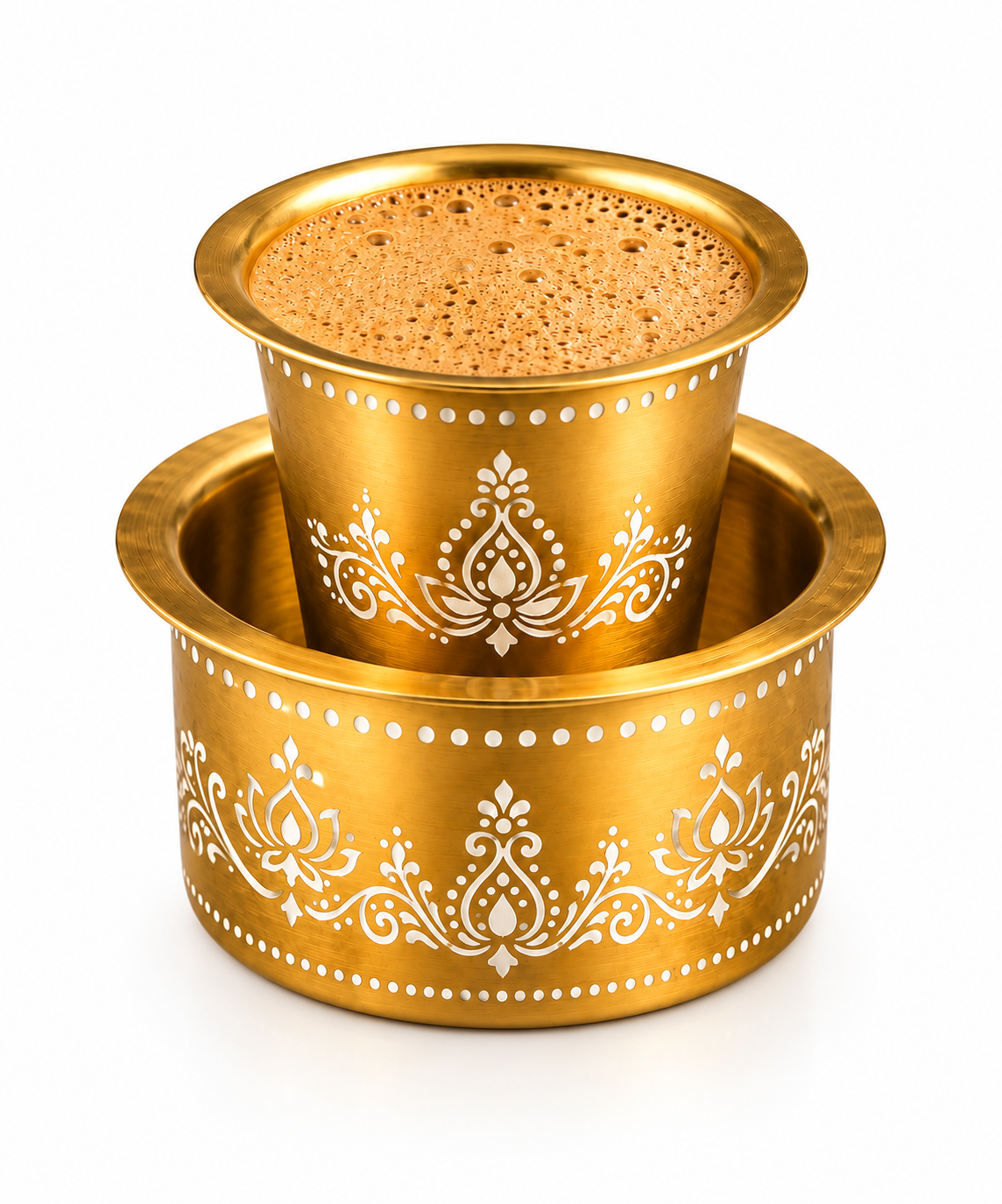
Bengal has worked copper alloys for as long as it has had temples and kitchens. Every household object of consequence — the water pot, the oil lamp, the plate a guest was served on — was once made of brass or kansa, bell-metal of roughly four parts copper to one of tin. Food served on kansa was believed to be purer and better for health, and a set of kansa was part of every bride’s trousseau.
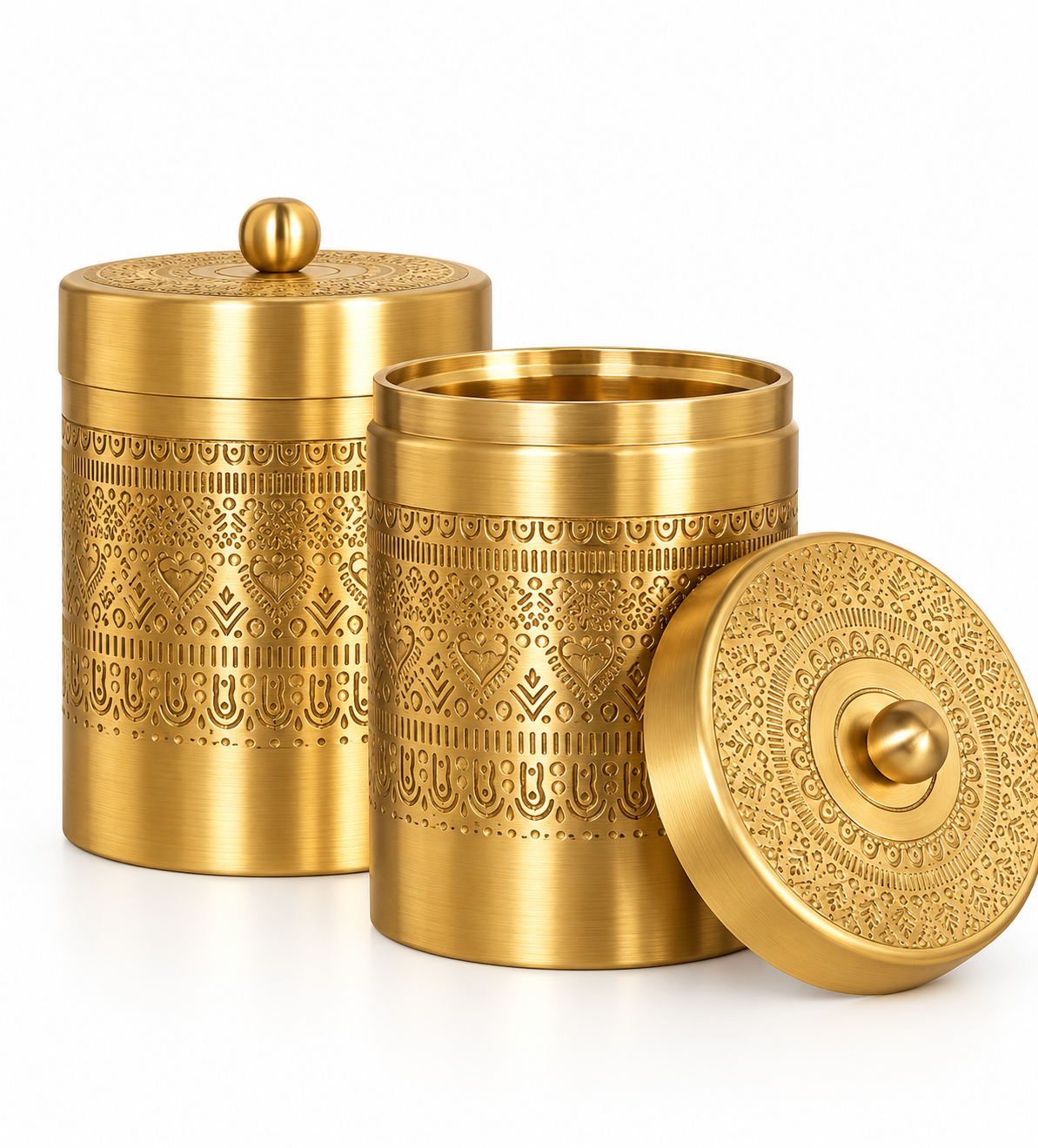
The smiths who made them are the Kansari or Kangsabanik — one of Bengal’s nine traditional artisan castes. Kansa is shaped by casting and then hours of beating and hammering; brass is cast, spun or raised from sheet, then engraved with a chisel, line by line, in vines, trees and paisleys.
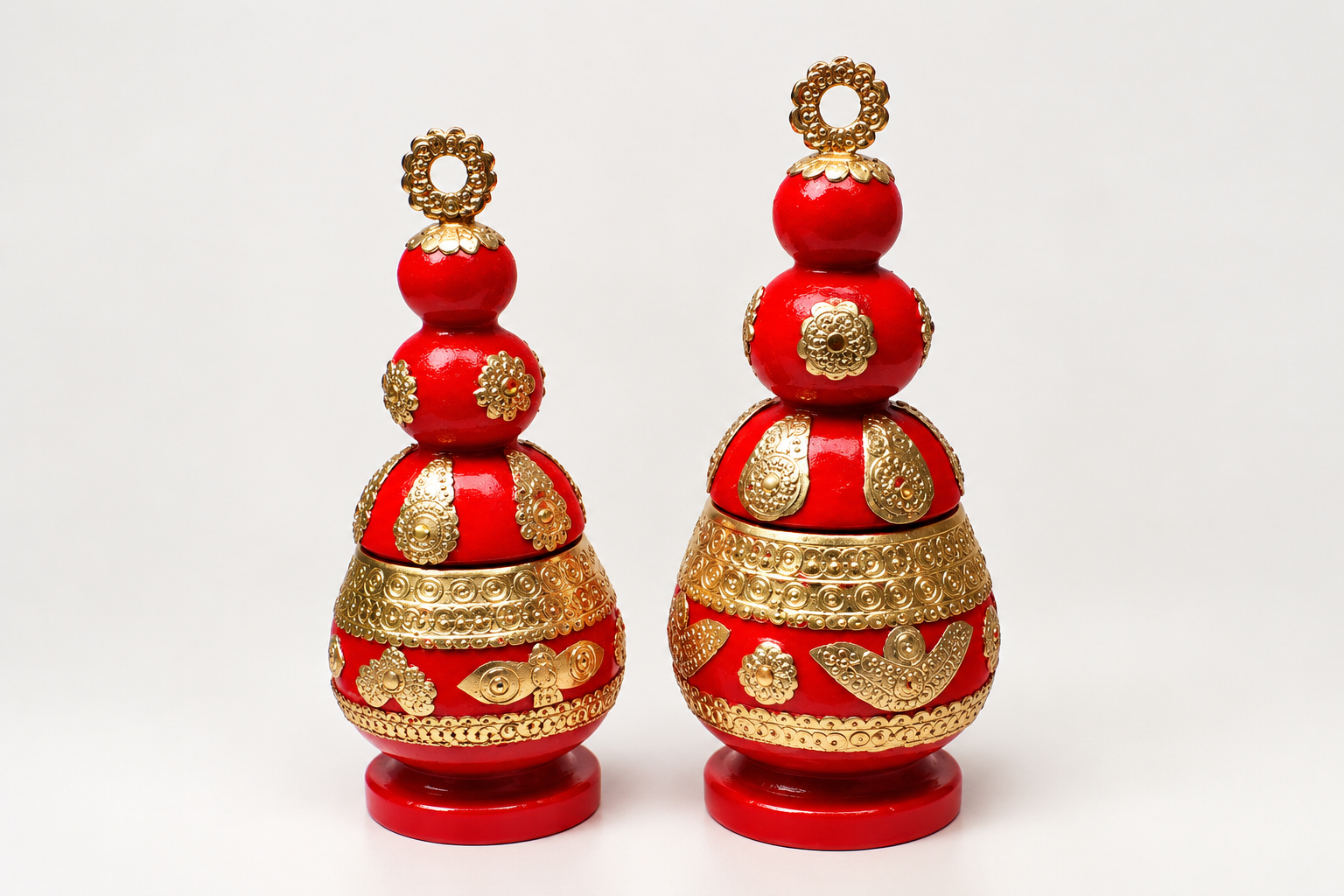
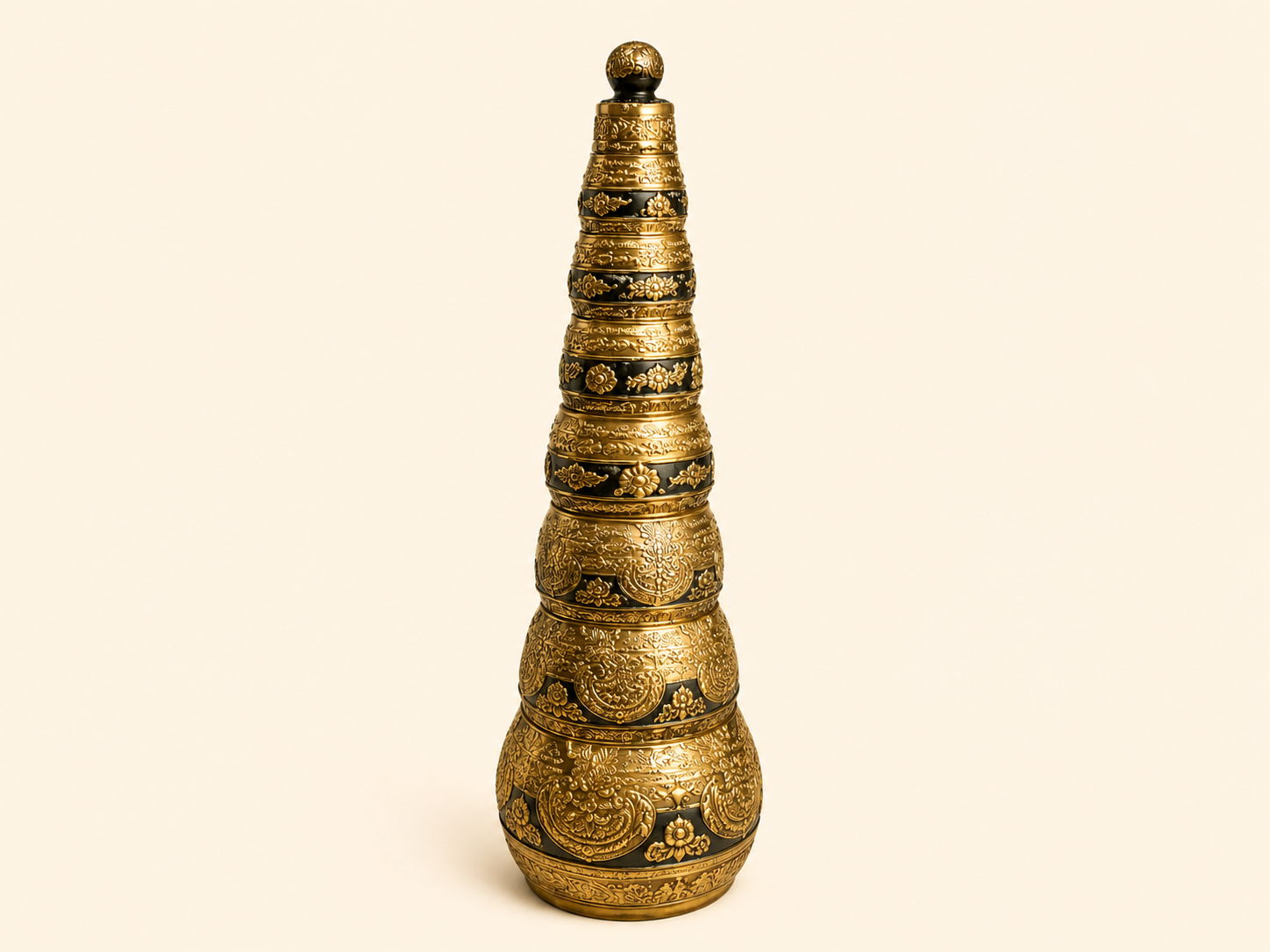
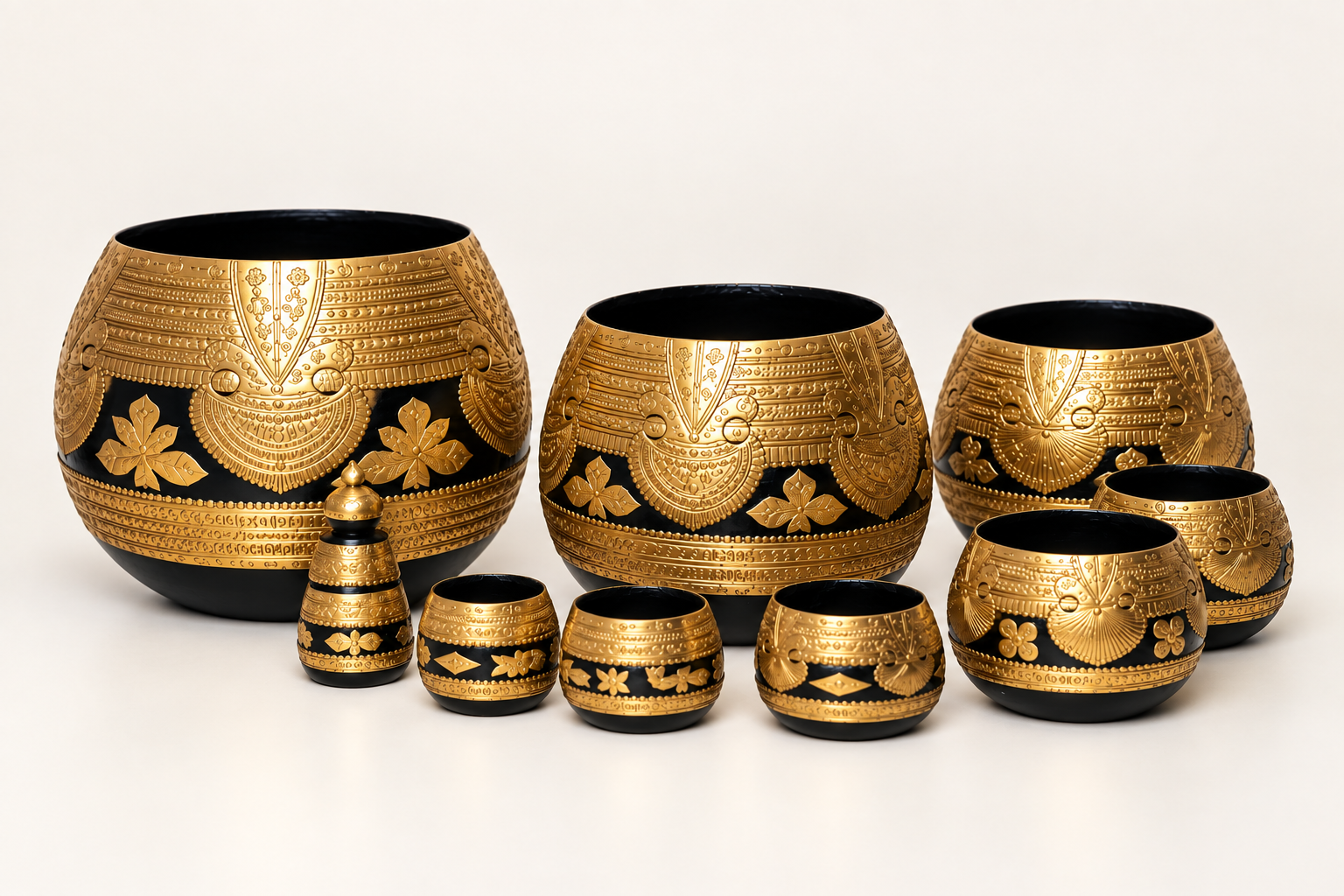
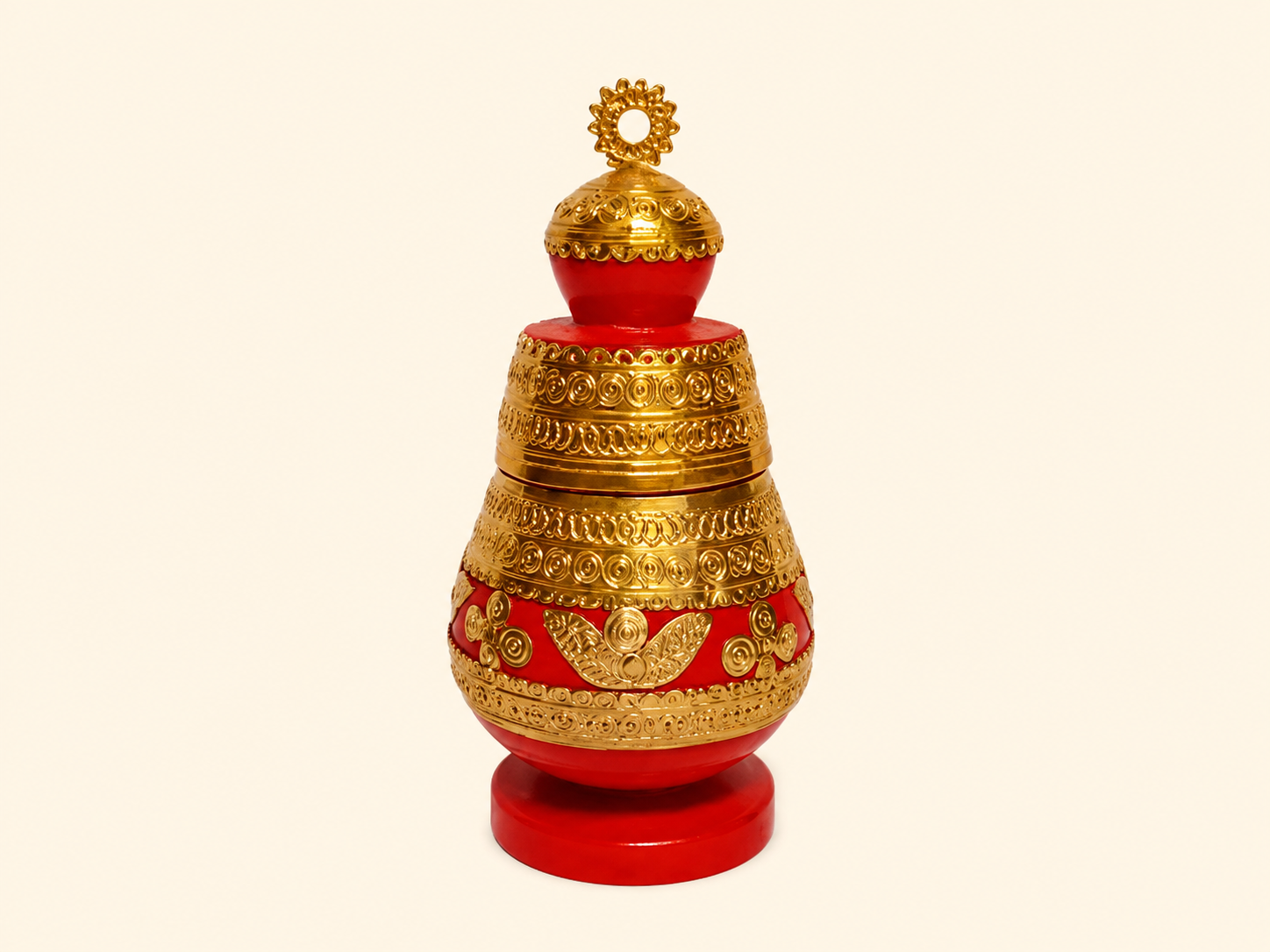
Alongside the smiths’ own work, brass has always dressed the wooden objects of Bengali ritual: the gachkouto, the vermilion box a bride carries from her wedding to her new home, and the sherpai, the nested measuring bowls once used to weigh paddy, both bound in embossed brass sheet.
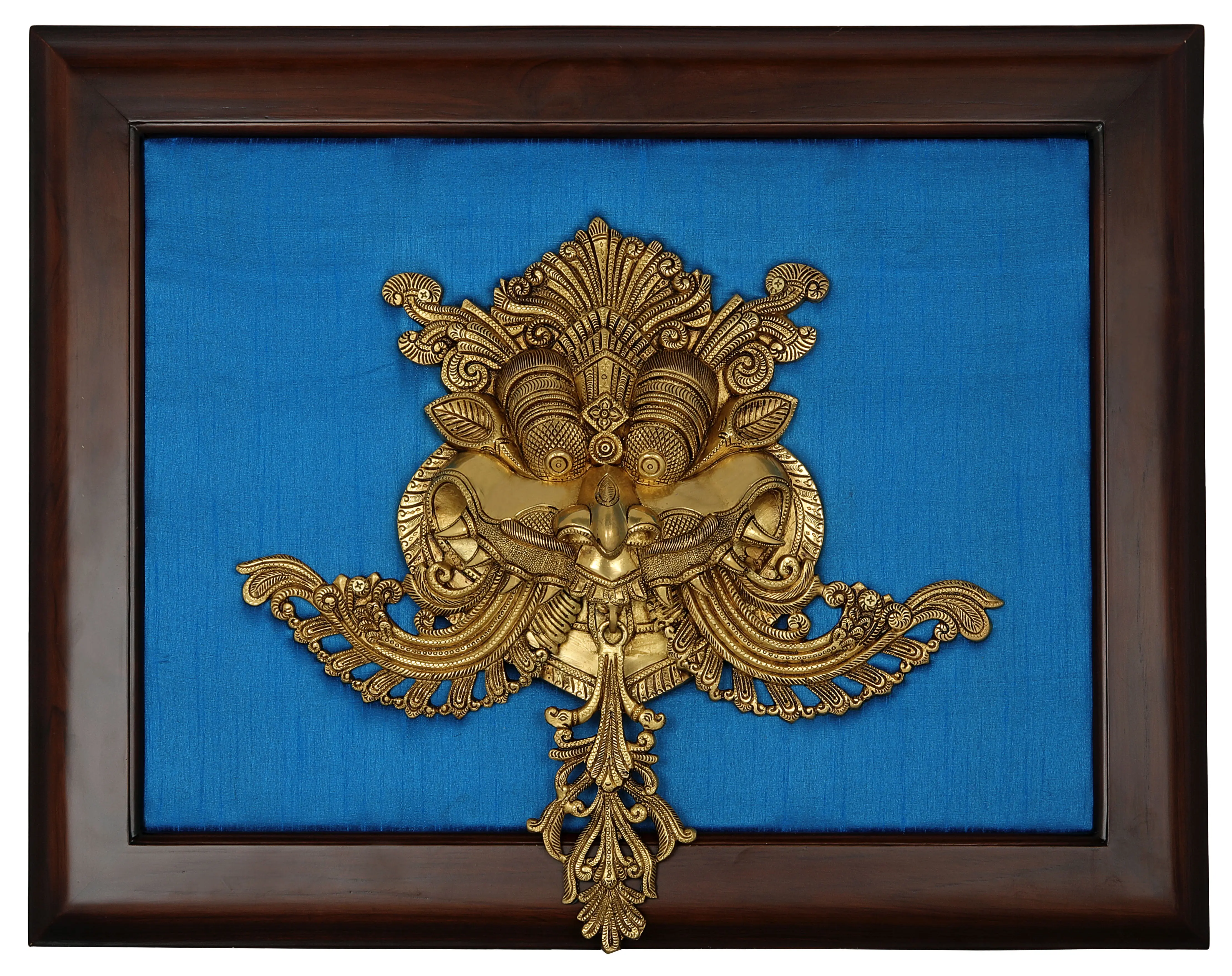
A sherpai set once measured a farmer’s harvest: up to twelve nesting bowls of mango or jackfruit wood, from a full maund (about 40 kg) down to a single chhatak, each rimmed in brass embossed with birds and flowers. The gachkouto is the bride’s: a stacked wooden vermilion box wrapped in brass, carried from the wedding to her new home and kept for life. Both are now rare, and made by only a few families.
Brass and bell-metal are worked across the old metal belt of south-west Bengal. Our pieces come from Kansari workshops in Bankura — Bishnupur has long been known for its bell-metal dinnerware — and Bardhaman. The sherpai tradition is kept alive in neighbouring Birbhum, around Lokepur near Suri. Much of the craft is still family-run, with sons learning the hammer and chisel from their fathers.
Copper and zinc (brass) or copper and tin (kansa) are melted and poured into a rough blank.
The blank is heated and hammered over anvils, again and again, into plate, bowl or pot.
The piece is scraped true on a lathe and polished to its golden shine.
Patterns are chased in with a chisel, or embossed brass sheet is riveted onto wooden pieces.
Brass and kansa darken naturally with air and use. Wash with mild soap and dry straight away so water doesn’t spot. To restore the shine, rub with lemon and salt or tamarind paste, then rinse and dry. Don’t leave sour food in kansa for long. Wooden sherpai and gachkouto pieces should only be dusted with a dry cloth.