Kolka / Alpana · Alpana
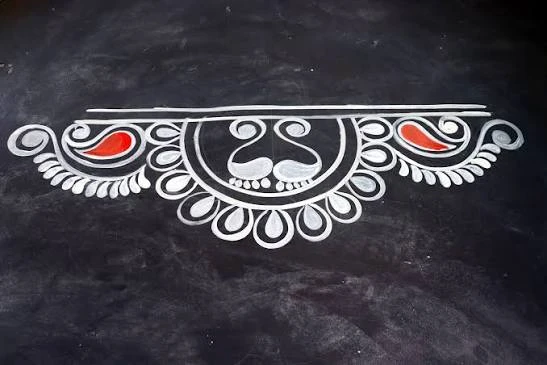
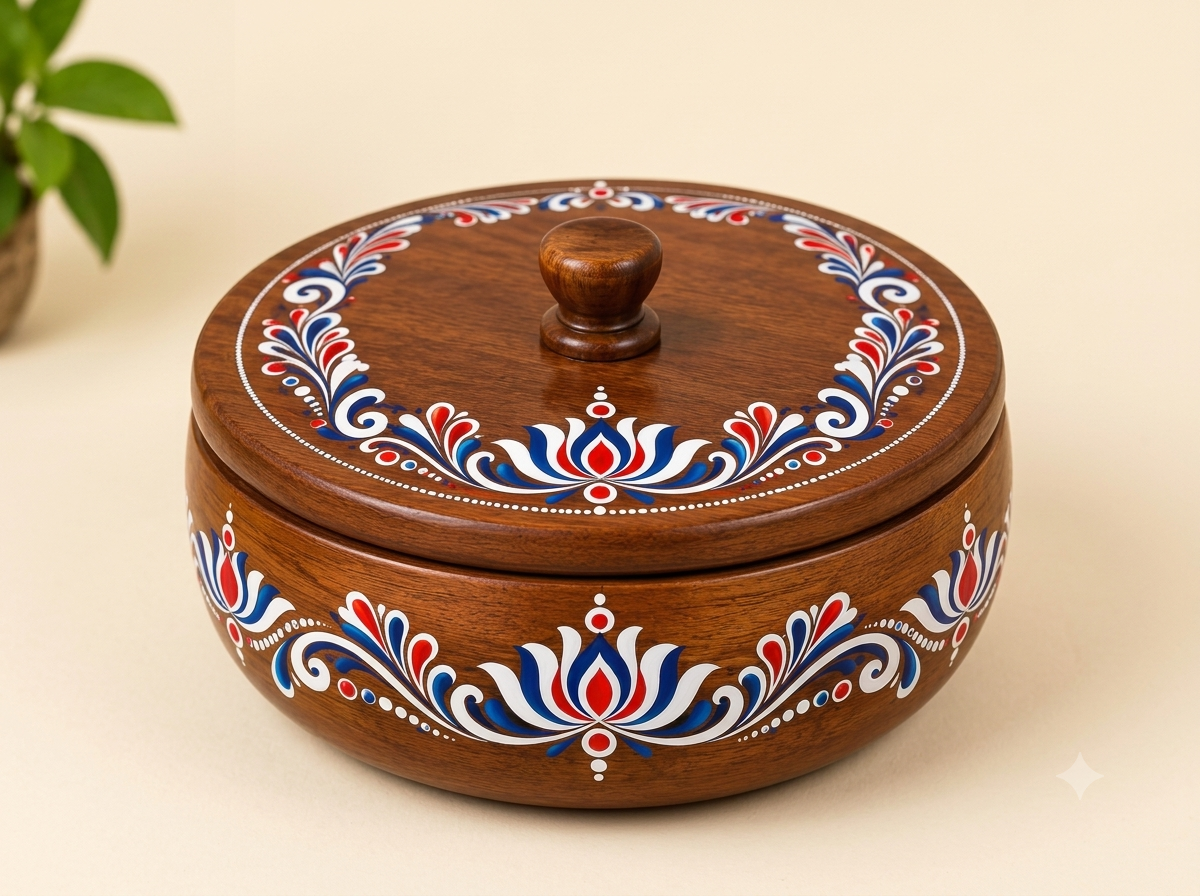
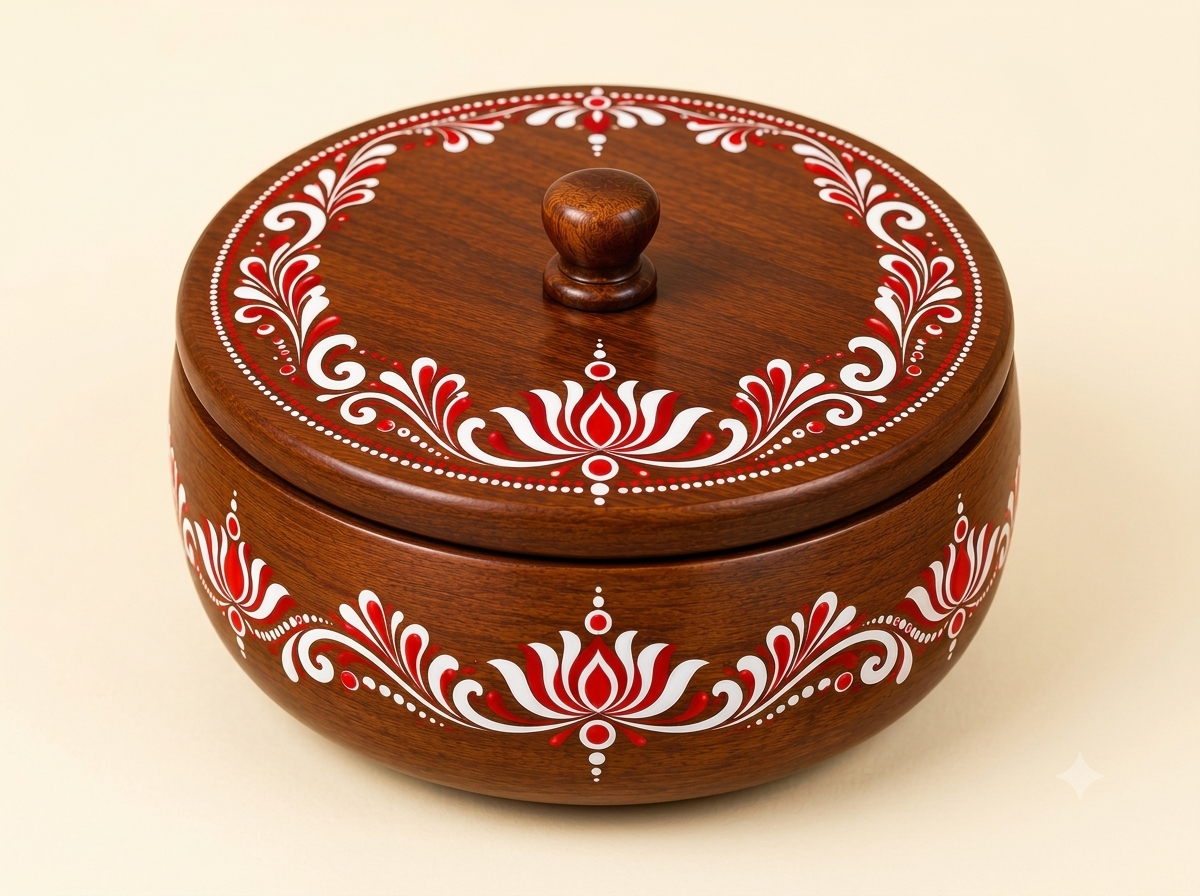
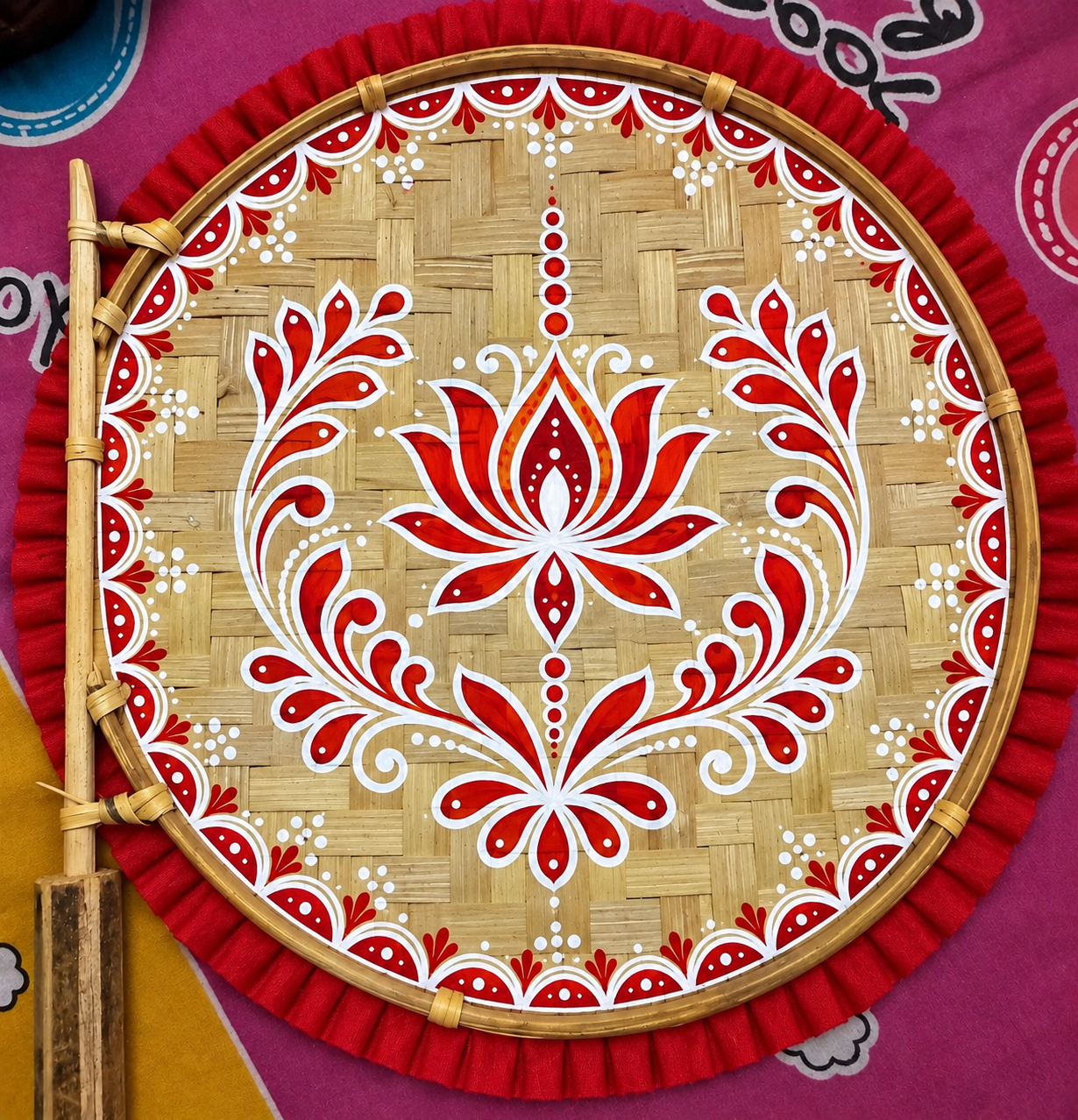
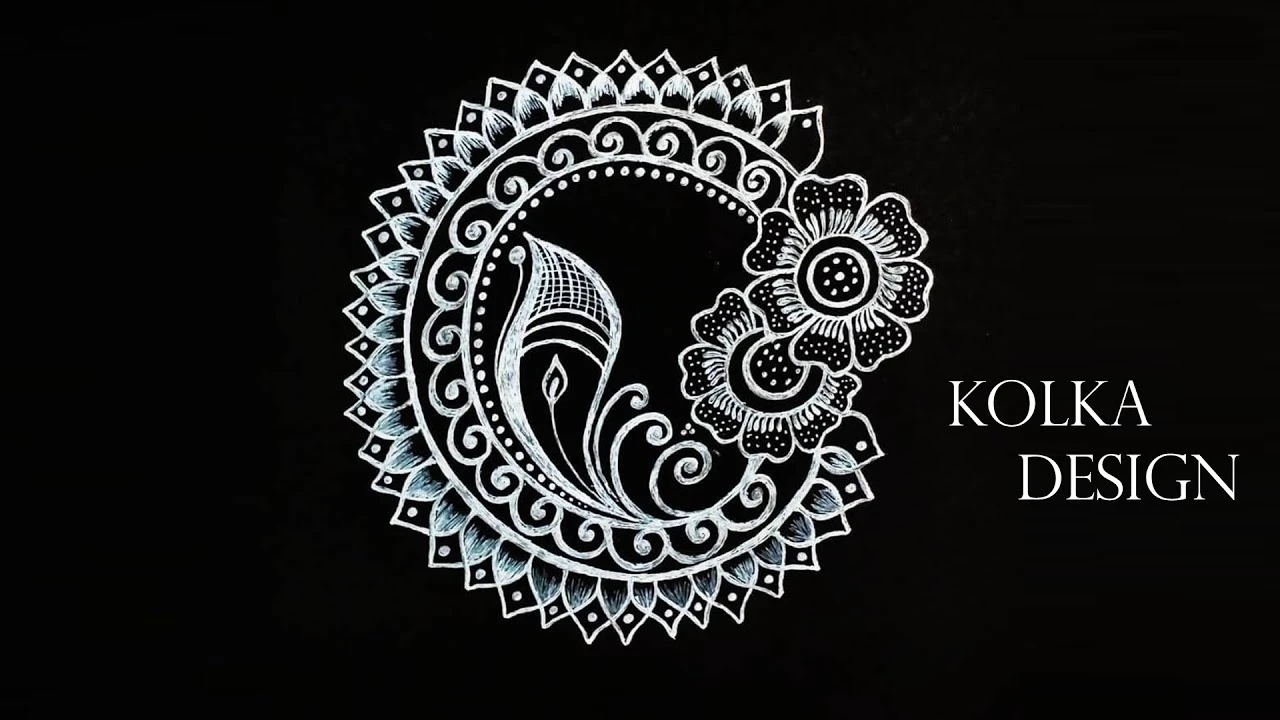
Alpana is Bengal’s ritual floor drawing — lotus, conch, paddy sheaf and the footprints of Lakshmi, framed by the kolka, a curling paisley border. Drawn in rice paste for a festival and swept away after, it has always been temporary. Painted onto the bamboo kulo, the hand fan and the wooden box, the same motifs become something a bride can carry and a home can keep.
Kolka / Alpana · Alpana
Kolka / Alpana · Alpana

Kolka / Alpana · Alpana

Kolka / Alpana · Alpana
Kolka / Alpana · Alpana
Kolka / Alpana · Alpana
Kolka / Alpana · Alpana
Kolka / Alpana · Alpana
Kolka / Alpana · Alpana

Kolka / Alpana · Alpana

Kolka / Alpana · Alpana
Kolka / Alpana · Alpana

Kolka / Alpana · Alpana
Kolka / Alpana · Alpana

Kolka / Alpana · Hand-painted
Kolka / Alpana · Hand-painted
Kolka / Alpana · Hand-painted
Kolka / Alpana · Hand-painted
Kolka / Alpana · Hand-painted
Kolka / Alpana · Hand-painted

Kolka / Alpana · Hand-painted
Alpana is Bengal’s ritual floor drawing — lotus, conch, paddy sheaf, fish, the footprints of Lakshmi and, framing them all, the kolka: the curling paisley border. It is made with a paste of soaked, ground rice, drawn straight onto the swept courtyard with a fingertip, and passed from mother to daughter as part of the women’s vrata rituals.
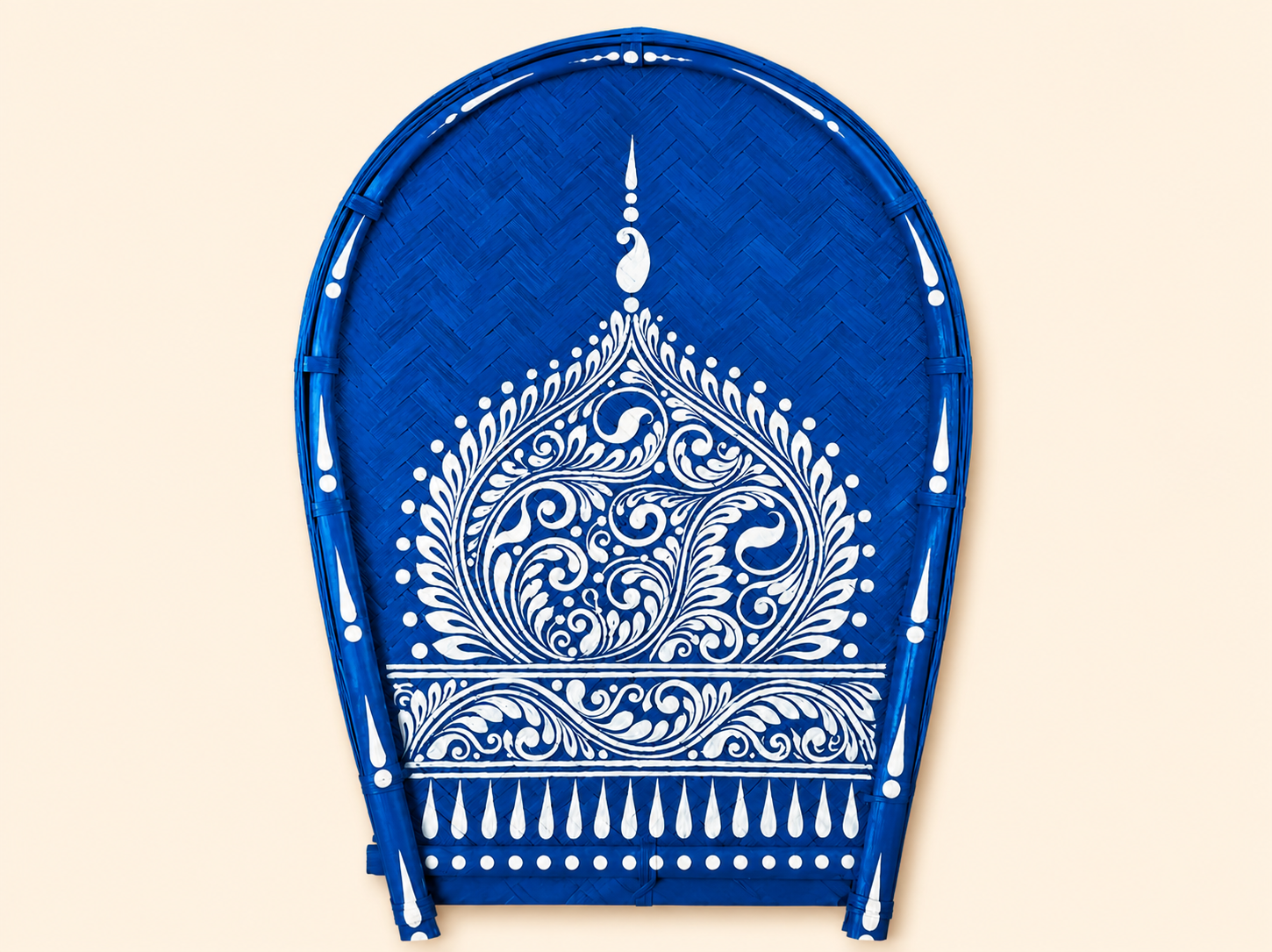
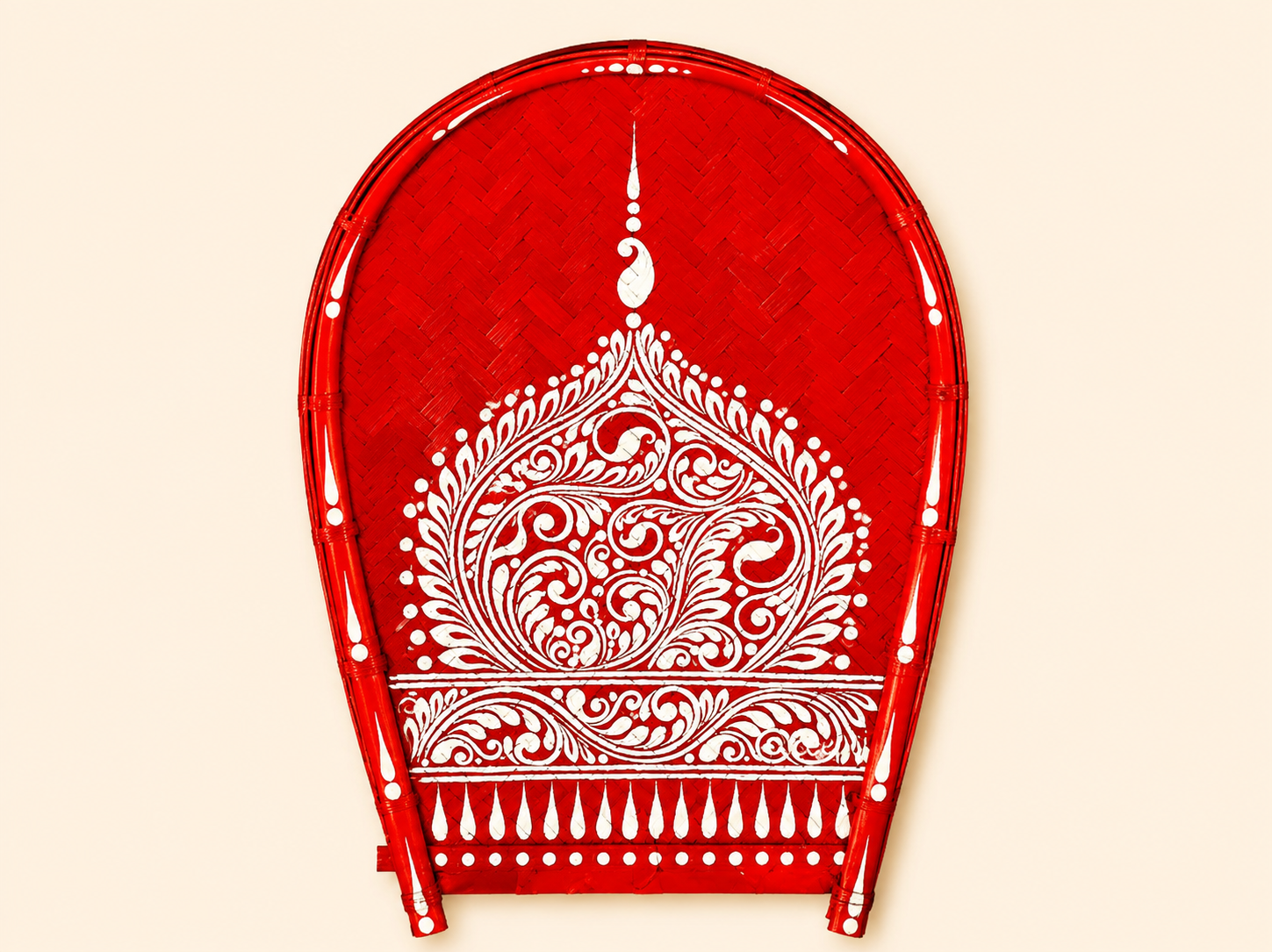
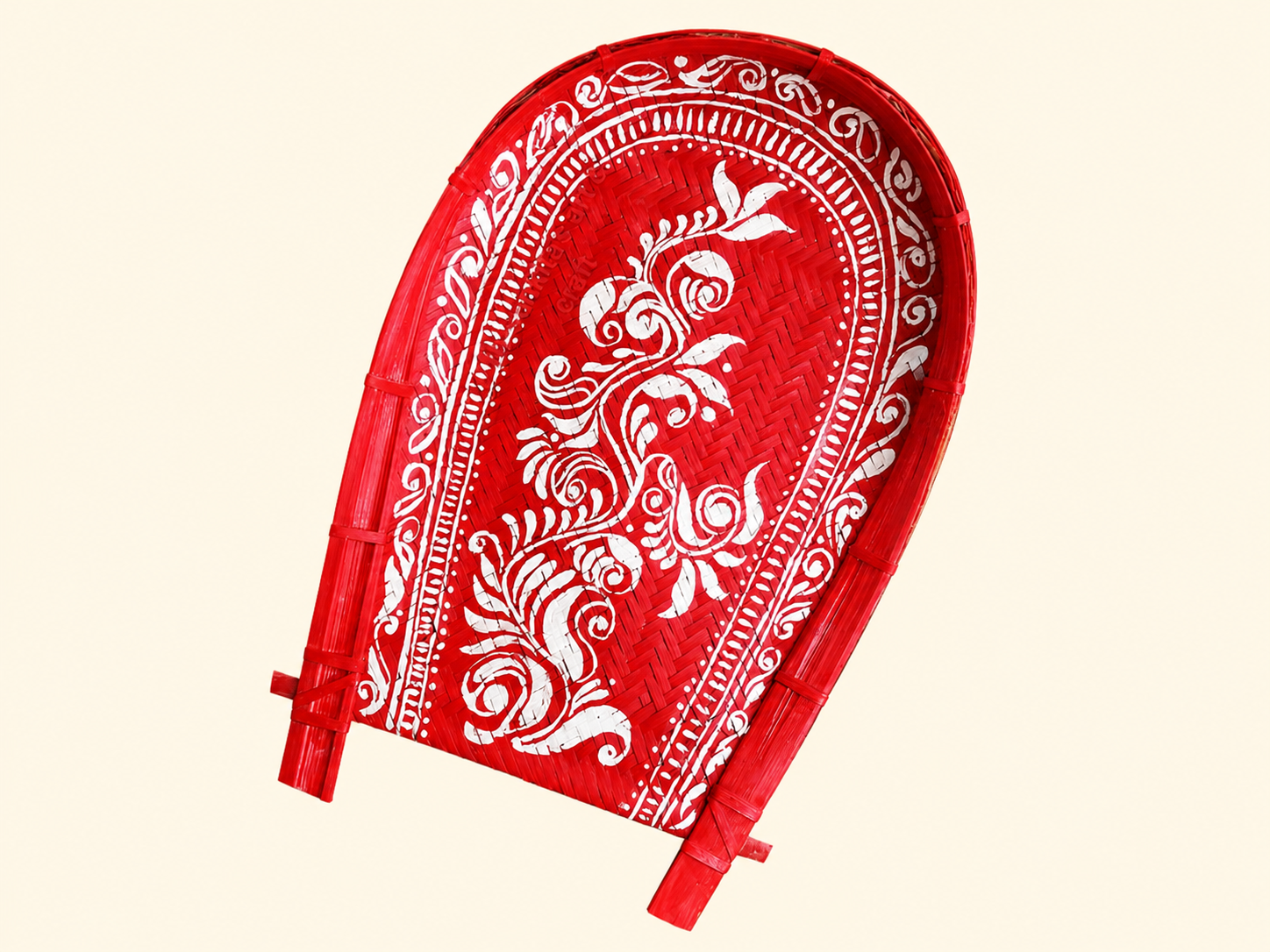
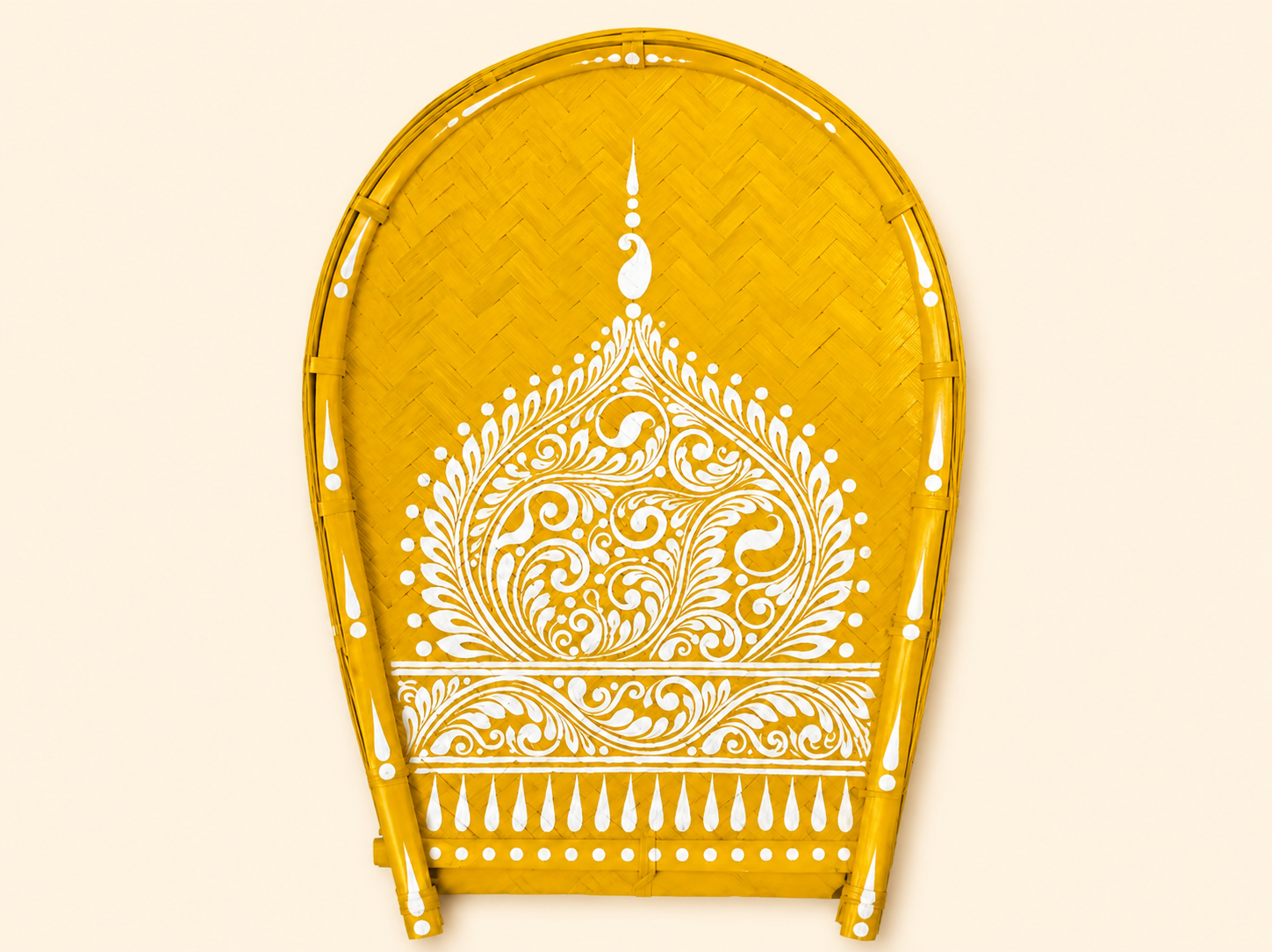
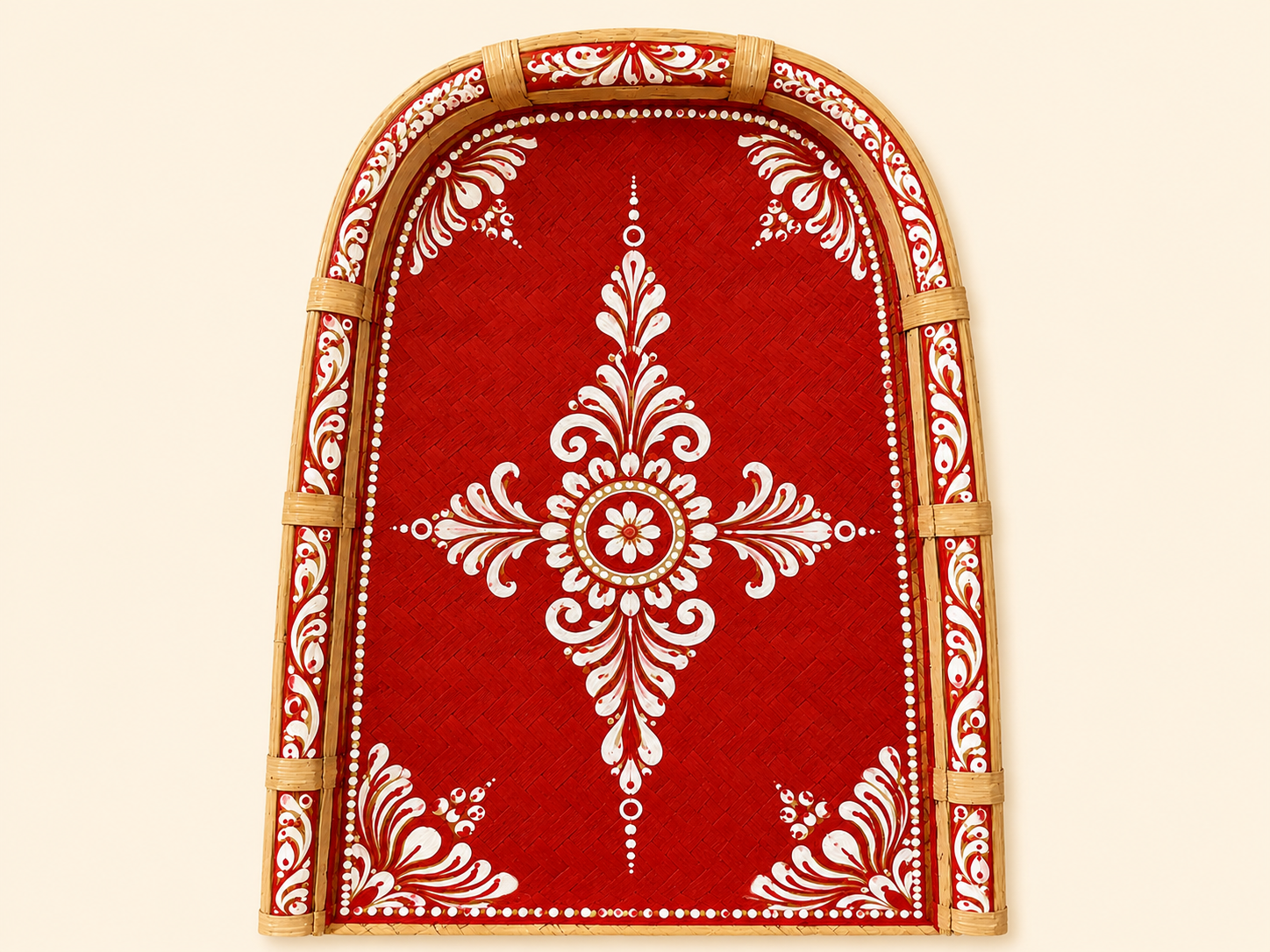
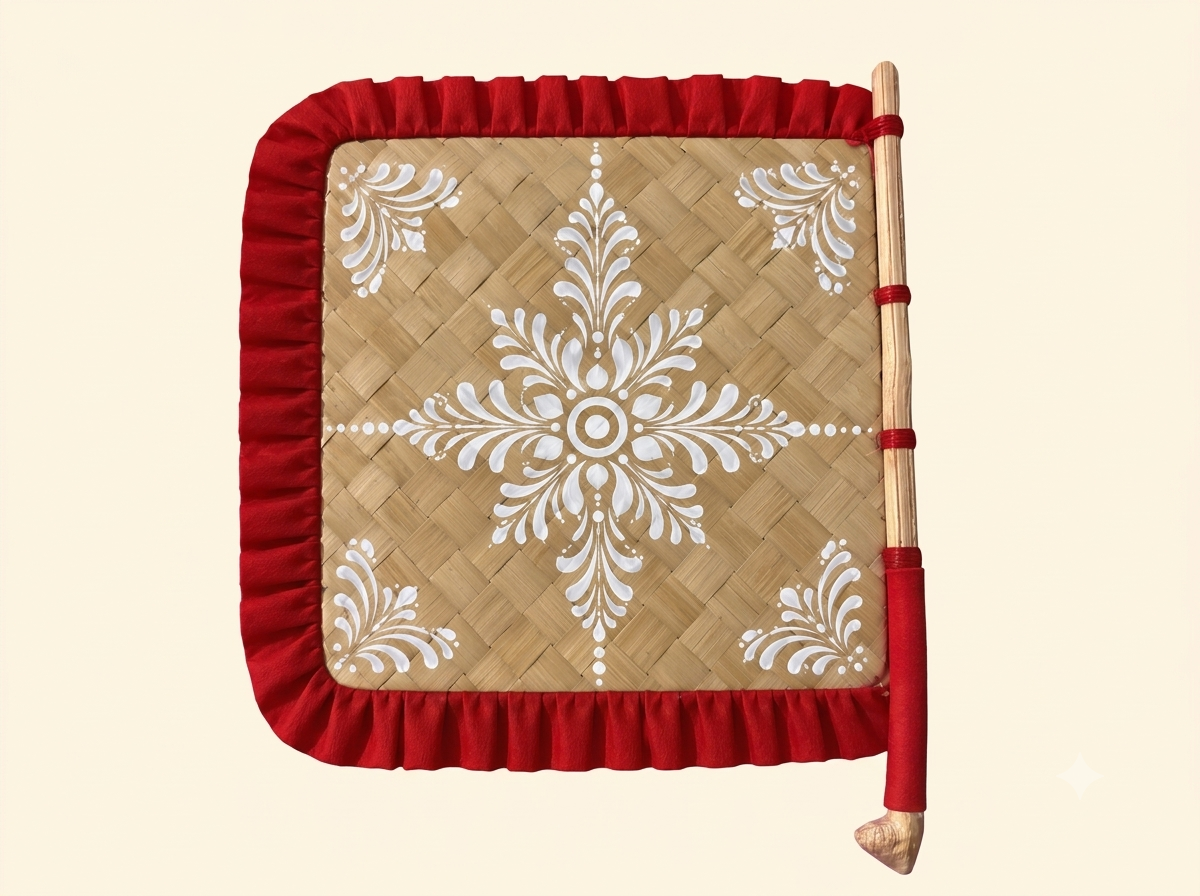
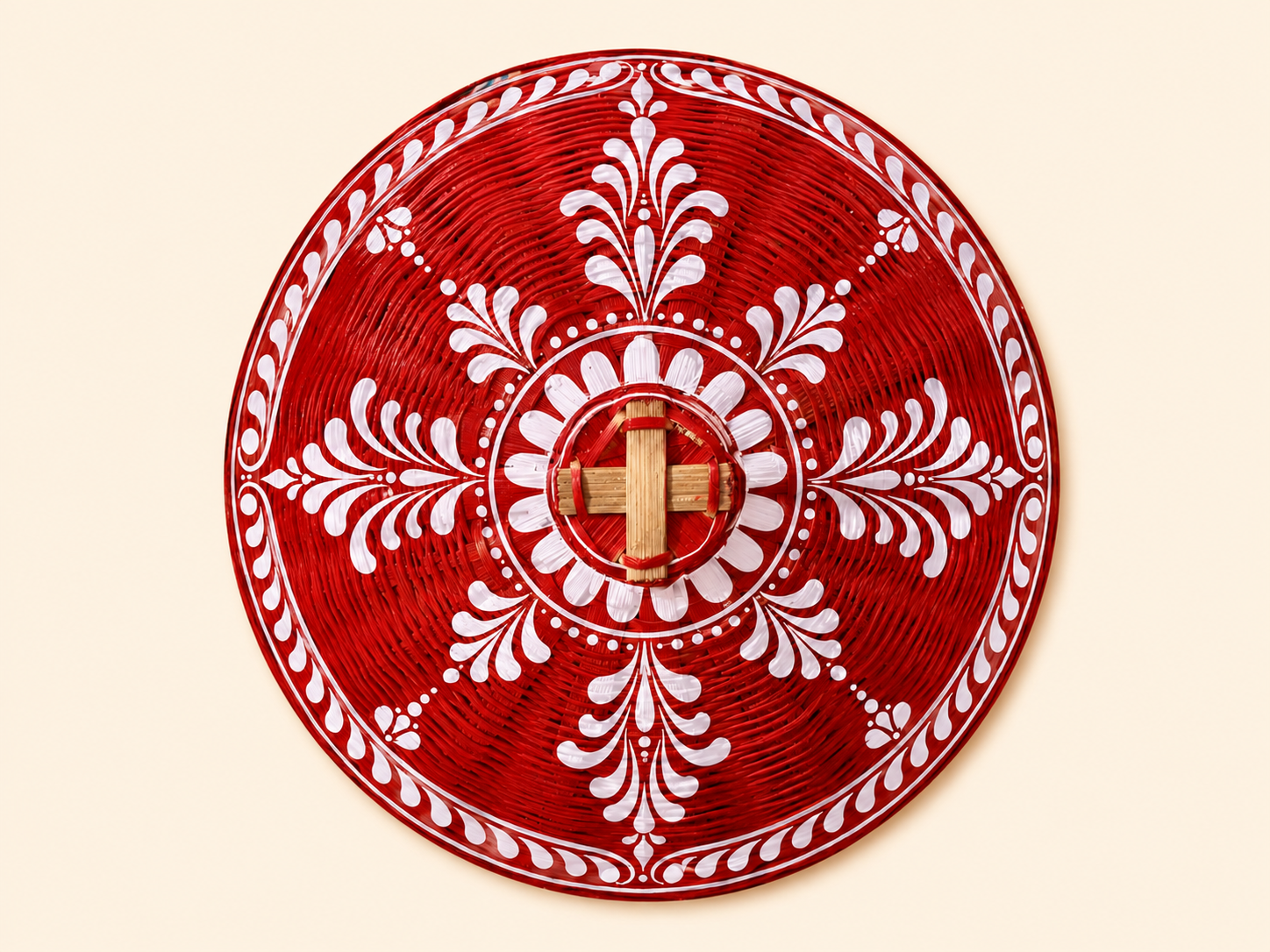
The same motifs have always travelled onto the objects of ritual. The kulo, the bamboo winnowing tray that separates grain from chaff, is painted with alpana and vermilion for weddings — carried at the gaye holud, the aiburobhat and the boron, when the bride’s family welcomes the groom. The dala, the round tray of offerings, and the bamboo hand fan are painted the same way.
In 1919 Abanindranath Tagore set the tradition down in Banglar Brata, and the artists of Santiniketan turned it into a studied art. Today women artists across rural Bengal paint it onto kulos, fans and wooden boxes — alpana you can keep.
No Bengali wedding is complete without a painted kulo. Laid with rice, paddy, turmeric, a lamp and a conch, it is waved before the groom as he arrives — a blessing and a guard against the evil eye. Afterwards it is hung on the wall of the new home. The red-and-white alpana, the paired fish and the bride-and-groom figures painted on it are meant to bring plenty and a long marriage.
Alpana belongs to all of rural Bengal. Our painted pieces are made by women alpana artists in West Bengal, working on bamboo kulos, dalas and hand fans woven by local basket-makers, and on turned wooden boxes. Santiniketan and Bolpur in Birbhum, where Kala Bhavana shaped the bold, outlined style still drawn for Basanta Utsav, remain the craft’s best-known home.
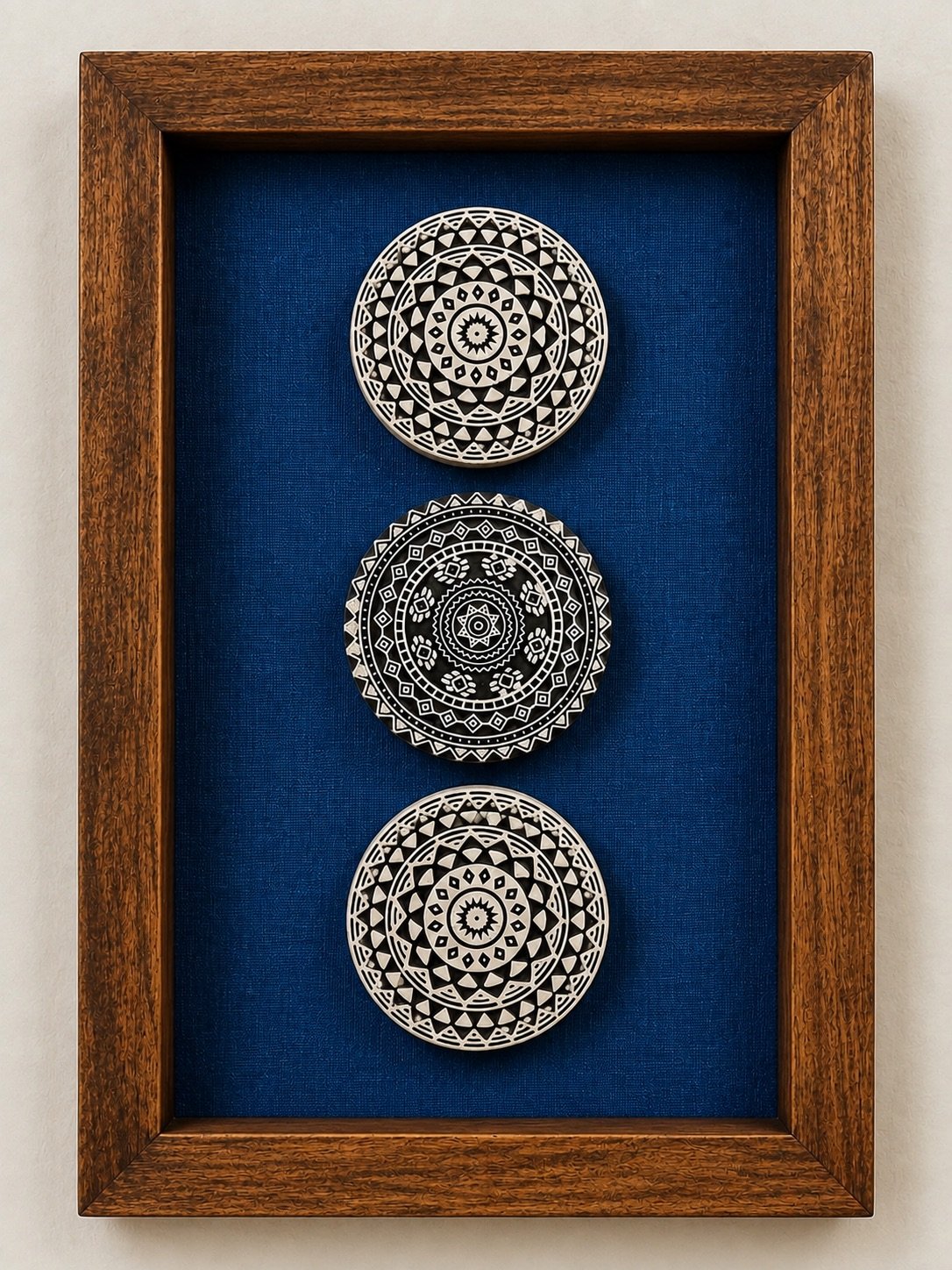
Split bamboo is woven into the kulo, dala or fan; boxes are turned and sanded from wood.
The surface is sealed and given a ground colour — red, white, yellow or blue — so the design reads clean.
The artist paints lotus, conch, fish and the kolka border from memory, with a fine brush and no stencil.
Details are added in white and gold, frills or tassels are attached, and the piece is left to cure.
The paint is applied by hand and is decorative, not food-safe. Keep kulos, fans and boxes out of damp and direct sun, and dust with a dry soft cloth — never wash. Hang kulos and fans on a wall hook by the rim, and store wedding pieces wrapped in cloth between ceremonies.