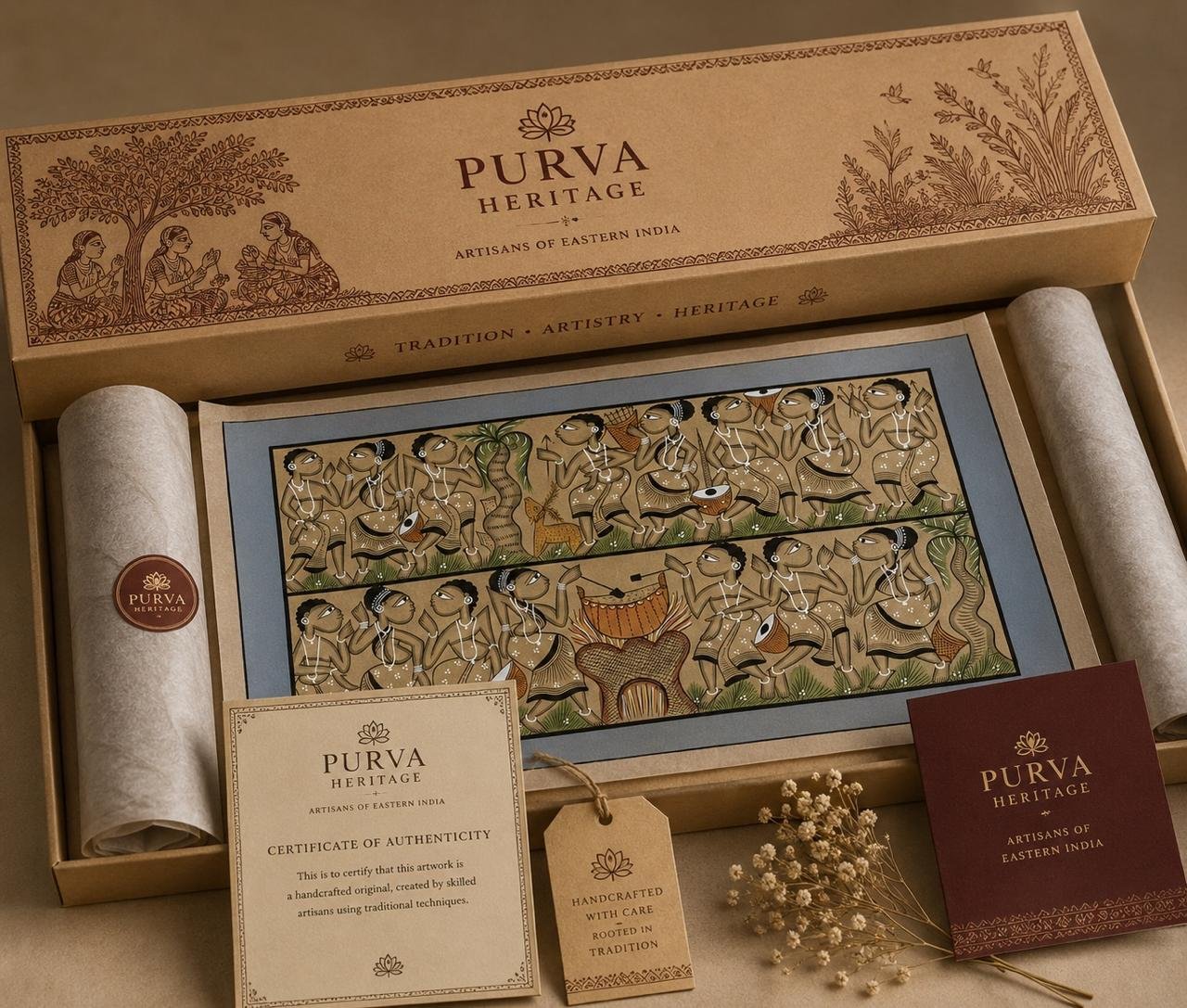
Patachitra · Naya, Pingla
Pata means cloth, chitra means painting. In the villages of Paschim Medinipur, the Patua or Chitrakar families paint long scrolls frame by frame in colours they grind themselves — turmeric, lamp black, clay and flowers bound with bel gum — and then sing the story as they unroll it. The songs are called pater gaan; the paintings are made to be kept.
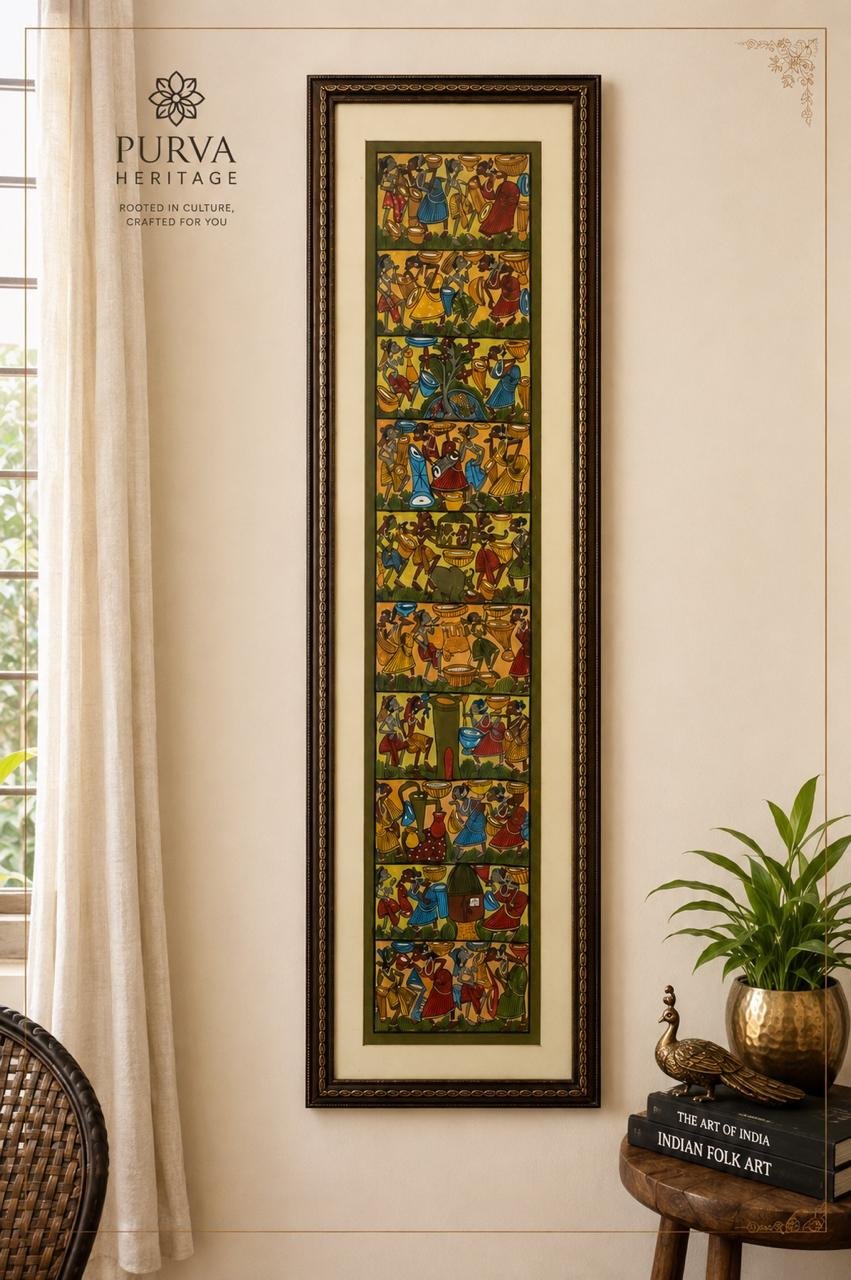
Patachitra · Naya, Pingla
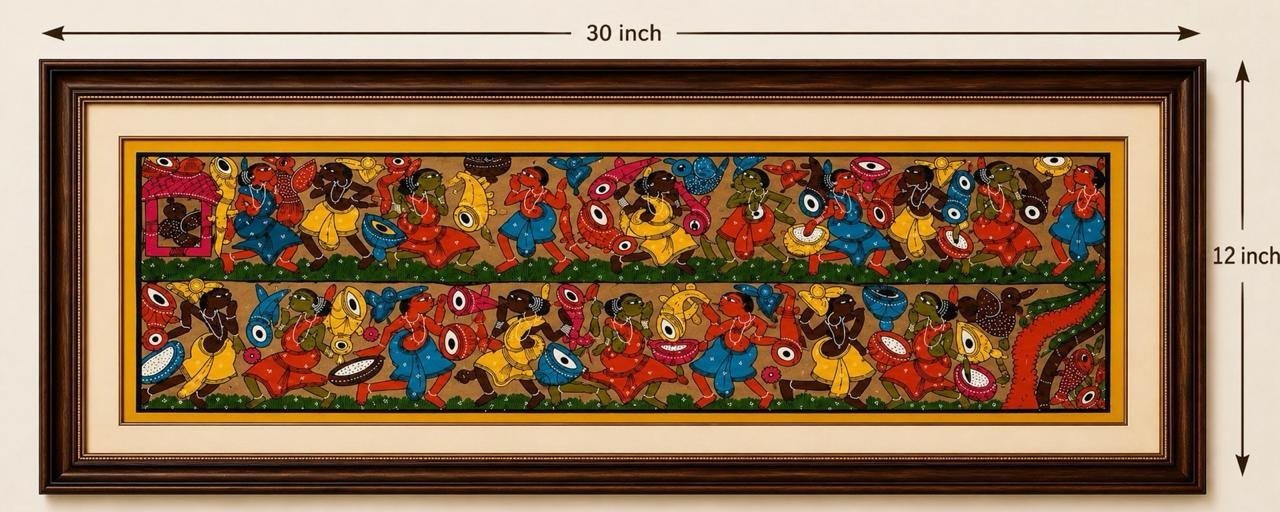
Patachitra · Naya, Pingla
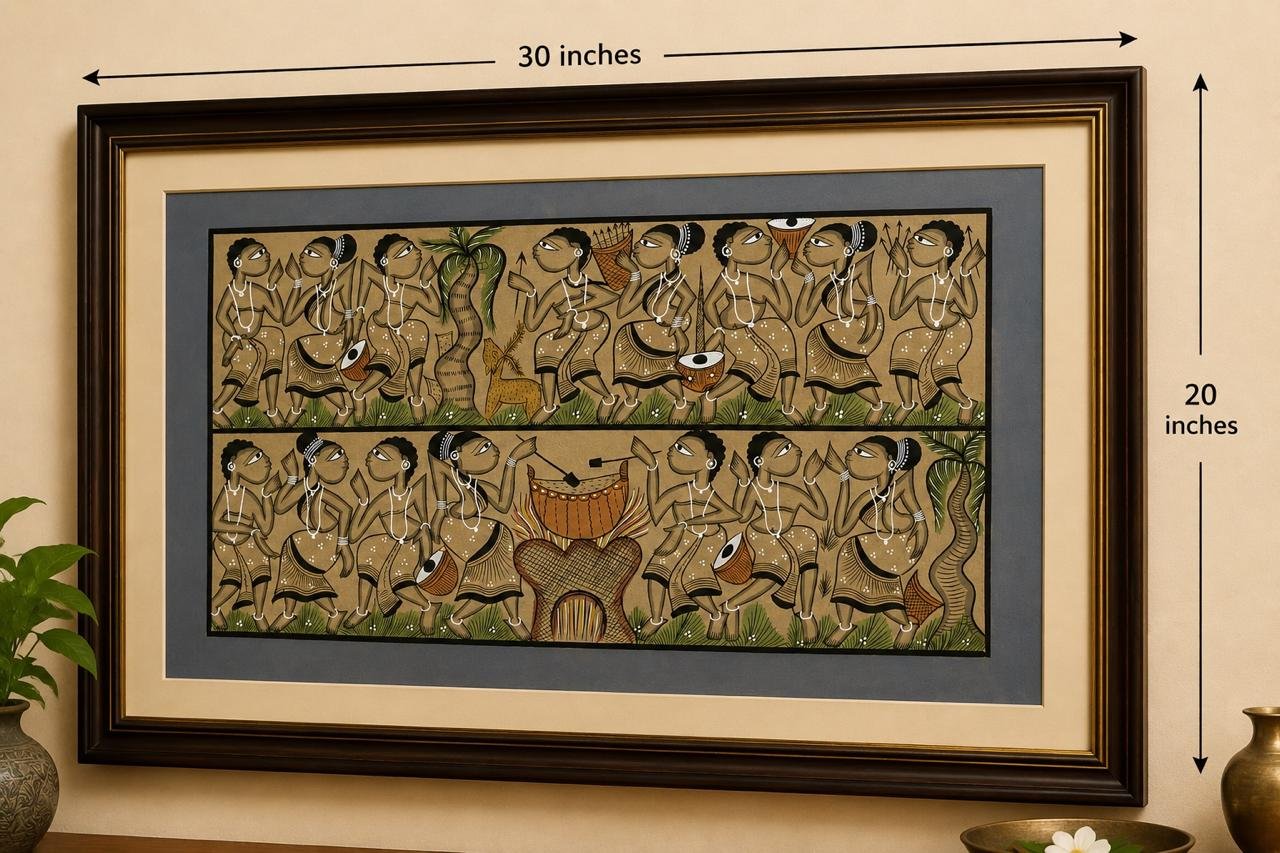
Patachitra · Naya, Pingla
Patachitra is the scroll painting of Bengal: a story laid out in a column of frames on paper backed with cloth, painted by the Patua — also called Chitrakar — who is painter, lyricist and singer at once. Travelling from village to village, a patua would unroll the scroll a frame at a time and sing the pater gaan written for it, so that the picture and the song told the tale together.
The stories are old and new. Episodes from the Ramayana and Mahabharata, Manasa and Chandi, Krishna-leela and the Santhal creation story sit beside village festivals, harvests and the songs patuas now write about floods, health and the lives of women. Faces are drawn in profile with large almond eyes; colour is laid flat and bordered in bold black line.
As the travelling performance faded, the painters turned to framed panels and single scenes for homes — the same hand, the same colours, the same story told in one glance.
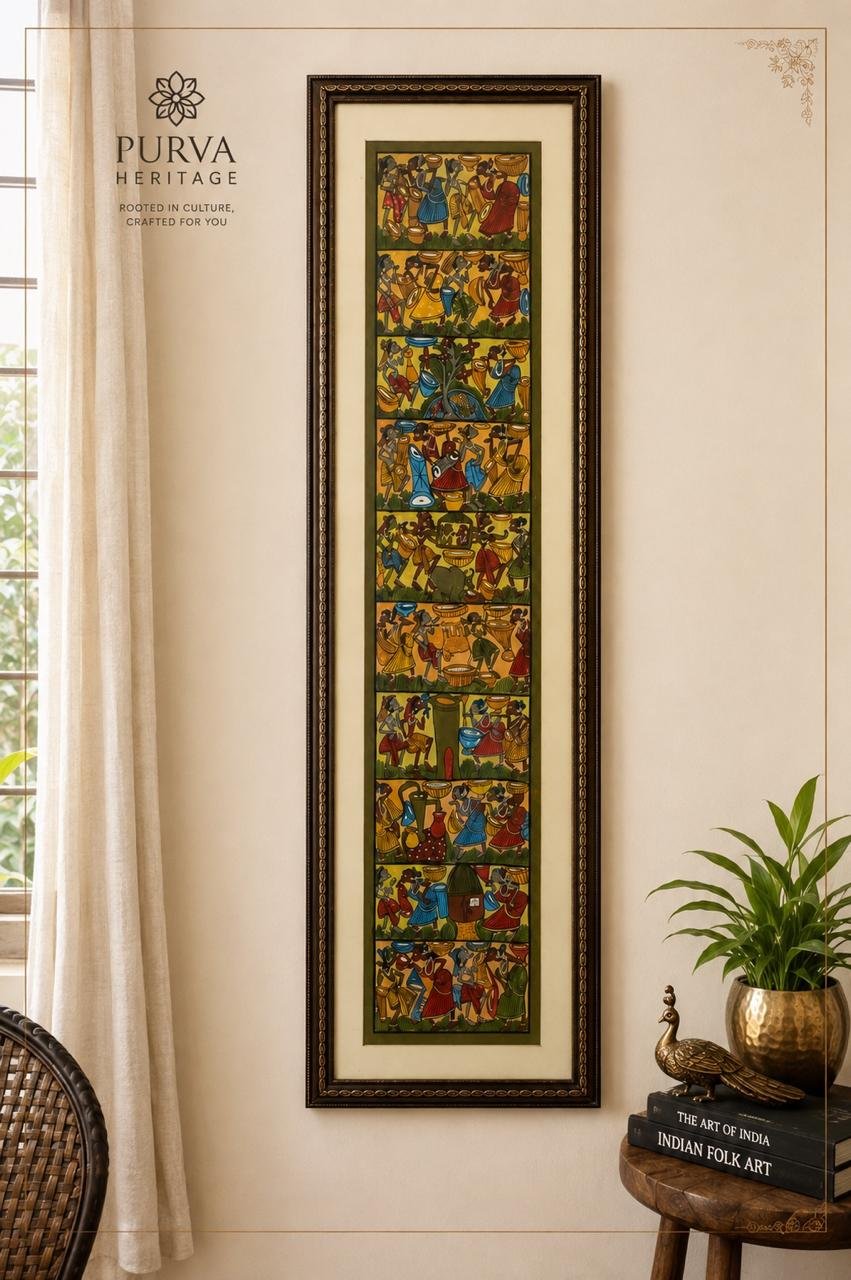
In Naya, in the Pingla block of Paschim Medinipur, almost every household paints. Its artists formed the society Chitrataru in 2010, which holds the Craftmark and administers the Geographical Indication for Bengal Patachitra, granted in 2018. Every November the village hosts Pot Maya, a three-day festival when the courtyards are hung with scrolls and visitors can hear the pater gaan sung in full.
The living centre of Bengal Patachitra is Naya, about 120 km from Kolkata in the Pingla block of Paschim Medinipur; related scroll traditions are kept in Purba Medinipur, Bankura, Birbhum, Murshidabad and Purulia. In Purulia and among the Santhal patuas of the western districts, figures are drawn more simply, with little background, in a muted earth palette — the style you see in our Santhal dance panels. Medinipur scrolls are typically a foot or so wide, with ten to fifteen frames stacked one above another.
Turmeric, lamp black, clay, leaves and flowers are ground and mixed in coconut shells with the gum of the bel fruit as binder.
Sheets of paper are joined and backed with old cloth so the scroll can be rolled and unrolled for years.
The story is outlined frame by frame with a fine brush, then filled in flat, bright colour.
Bold black borders and fine detail are added last; the finished pata is dried, then rolled or framed.
Patachitra is painted in natural colours on paper, so it is sensitive to damp and sunlight. Hang framed pieces away from direct sun, bathrooms and kitchens. Dust the frame and glass with a dry soft cloth — never spray cleaner onto the glass. Store unframed scrolls rolled loosely, painted side out, wrapped in cotton cloth.